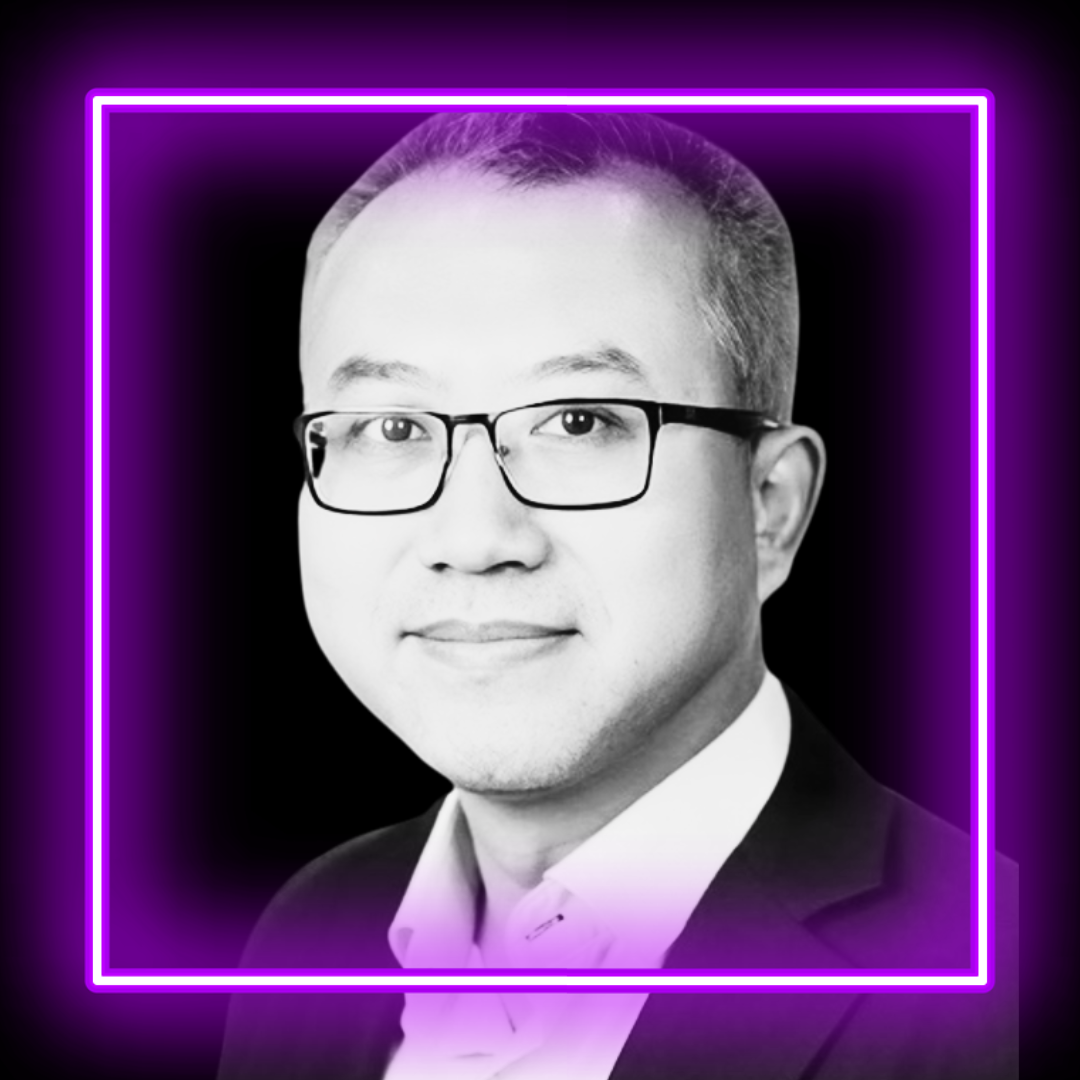
Zhenghong Gao, PhD, Co-founder and COO at Uni-Pioneers BioMed, Inc. and CSO at Zhongmou Therapeutics / Augelux Therapeutics (HK)
Biography
Dr. Zhenghong Gao is a prominent scientist, strategic executive, and entrepreneur dedicated to the pursuit of life-changing medicines. Standing at the forefront of precision medicine and nanotechnology, he specializes in "smart" nanosystems designed for the precise diagnosis and treatment of complex diseases.
As an entrepreneur, he and the team are pioneering technologies for advancing transformative medicine, such as early detection of the cancers and in vivo cellular programming. Recently, he serves as a chief strategy officer in an optogenetic therapy company for restoring vision for the blind.
Previously, he worked at Asklepios BioPharmaceutical Inc (Bayer), a biotech company cofounded by gene therapy pioneer – Jude Samulski. His previous work in drug delivery and therapeutic gene editing focuses on engineering groundbreaking non-viral approaches in advancing programmable medicine by overcoming the body’s toughest biological barriers, such as blood brain barriers and glomerulus filtration barriers etc. Previously, at the University of Texas at Dallas, Dr. Gao, as a Principal Investigator and Assistant Professor, led the next generation of innovators in developing minimally invasive methods to bypass the blood-brain barrier (ACS Nano 2024, Nanoscale Advance, 2024, Brain-X, 2024). He has also contributed the landmark research into the nanoscale anatomy of brain extracellular space (Nature Nanotechnology 2017), which has redefined how we understand molecule and drug diffusion in the central nervous system. A recipient of the Therapeutic Idea Award etc, he has authored over 45 scientific papers and co-invented several technologies for early cancer detection and precision delivery. He was a featured speaker at international platforms, such as TEDx and ICANX etc. His scientific profile has been featured by Cell and Gene Therapy Insight etc.
With a Ph.D. from the University of Tokyo and a career spanning elite institutions like UT Southwestern, Michigan Medicine, and CNRS/Bordeaux, Dr. Gao bridges the gap between rigorous molecular engineering, nanotechnology, drug development and clinical breakthroughs to redefine the boundaries of advanced therapies.
Interview
NanoSphere: Tell us a bit about yourself—your background, journey, and what led you to where you are today.
Zhenghong: I am committed to engineering 'smart' delivery systems that turn therapeutic molecules into reliable medicines. My journey has been guided by a single, driving question: How can we engineer solutions to navigate the human body's most profound biological barriers to deliver life-changing medicines?
I am, at my core, a translator between disciplines. With a Ph.D. from the University of Tokyo and scientific path spanning elite institutions like UT Southwestern Medical Center and CNRS/Bordeaux, I've built a career at the rigorous intersection of nanotechnology, biomedicine, drug development, and clinical insight. My early research was fundamentally about mapping the unknown in the central nervous system—most notably through our landmark work published in Nature portfolio (Nature Nanotechnology 2017, Science Editor’s Highlight) that revealed the nanoscale anatomy of the brain's extracellular space, which leveraged my background in engineering nanosystems by using biomolecules for applications in complex biological environment (J. Am. Chem. Soc., 2010, Advanced Materials, 2014; Sci. Rep., 2014). This redefined our understanding of how molecules travel in the central nervous system and posed a critical challenge: if we understand the barrier, how do we design vehicles to cross it?
A pivotal chapter at the University of Michigan, Ann Arbor, within the Department of Internal Medicine, provided the essential translational framework. There, I immersed myself in the full continuum from discovery to clinical translation. I applied principles of precision molecular engineering and targeted imaging to directly address the early detection and treatment of complex diseases, such as cancers in GI tract (Gastroenterology 2017), working at the nexus of engineering design and patient-focused therapeutic outcomes (Sci. Rep., 2017). This experience cemented my resolve to move beyond observation and into the creation of tangible, platform solutions.
That translational imperative is what ultimately led me to my work as a Principal Investigator at UT Dallas, where I led a team to engineer "smart" nanosystems for minimally invasive delivery across barriers like the blood-brain barrier and blood-spinal cord barrier (ACS Nano 2024). Our work was intentionally translational, authored in the language of high-impact science but with a clear line of sight to the patient.
This focus on creating viable therapeutic platforms is what prompted my full transition into the biotech industry. At AskBio (a Bayer company), founded by gene therapy pioneer Dr. Jude Samulski, I leveraged that end-to-end perspective to pioneer non-viral delivery platforms for therapeutic gene editing, specifically designed to overcome the body's toughest biological barriers (Cell and Gene Therapy Insights 2024).
Today, I synthesize these experiences into a dual role as both a strategic executive and entrepreneur. I serve as the Chief Strategy Officer at a company pioneering optogenetic therapy to restore vision, directly applying principles of precision biological engineering, and drug development to a profound clinical need. Concurrently, I work with teams to pioneer technologies for transformative medicine, from the early detection of cancers to in vivo cellular programming (Cell and Gene Therapy Insights 2026).
My path—from foundational discovery in Tokyo, through clinical translation at Michigan, to strategic leadership in biotech—has been a continuous evolution. It’s a journey dedicated to bridging the gap between deep scientific discovery and tangible clinical breakthroughs, always with the goal of redefining what is possible for human health.
NanoSphere: You’ve taken delivery-enabled modalities from preclinical work into IND and first-in-human settings.
What are the most common disconnects you’ve seen between robust preclinical efficacy and what ultimately matters in early clinical readouts? Zhenghong: From my experience, I see three primary disconnects:
First, the over-simplification of biodistribution and engagement. Preclinical models, while invaluable, often present homogeneous biological barriers. We might demonstrate stunning efficacy in an inbred mouse model with a pristine, young blood-brain barrier or a perfectly implanted tumor. However, in a heterogeneous human population—with variations in age, disease comorbidity, and prior treatments—the delivery system encounters a spectrum of biological landscapes. A nanoparticle or engineered capsid that elegantly crosses one model's barrier may see wildly variable efficiency in humans. The disconnect isn’t just about reaching the target cell; it's about achieving the necessary threshold of engagement across a diverse patient population to drive a consistent clinical signal.
Second, the unpredictable role of the human immune system. Preclinical immunocompetent models don't fully predict the nuances of human immune priming, especially against viral vectors or synthetic nanoparticles. We may see robust transgene expression or drug payload delivery in animals, only to find neutralizing antibodies, cytotoxic T-cell responses, or complement activation in humans that dramatically limit efficacy upon re-dosing or even blunt the initial effect. This isn't a failure of the modality's mechanism but a disconnect in predicting the human immune context.
Third, a fundamental mismatch in translational dosing rationale. In preclinical work, we often push to a maximum tolerated dose (MTD) to see a signal. In the clinic, especially for chronic or regenerative therapies, the therapeutic window is about more than acute toxicity. It's about the long-term biological consequences of saturation, off-target integration, or persistent immunogenicity. The 'effective dose' in humans is a nuanced balance between sufficient therapeutic efficacy, long-term safety and tolerability—a balance exceptionally difficult to model preclinically.
NanoSphere: From your perspective, where do most advanced modalities truly fail in translation—not at the level of payload design, but at the level of delivery biology and systems integration? What signals tell you early that a platform is unlikely to survive the path to patients?
Zhenghong: Based on my experience moving platforms from bench to bedside, I see a defining challenge: we can design brilliant payloads like CRISPR or engineered cells to work flawlessly in a dish, but we often fail to orchestrate their journey within the immensely complex human system. The real task is integrating a potent payload with a delivery system into a single, viable therapeutic product—one that is precise, translatable, and scalable.
I focus on engineering this system to meet two imperatives: 1) reliably achieving a therapeutic dose at the target site, and 2) ensuring it is inherently manufacturable under GMP standards.
Through this lens, I’ve observed three systemic warning points: 1) Inconsistence in translation: Components that work in artificially engineered models often fail short synergistically in real human disease relevant environment. The integrated system must maintain its structural integrity—its loading, surface chemistry, and stability—throughout its journey, or the payload never engages. 2) PK/PD misalignment: The system’s journey (pharmacokinetics) requires intentionally designed to match the payload’s required action (pharmacodynamics). This alignment is a core property. 3) Immune system recognition: The immune system interrogates the construct. We need to engineer its interface to productively avoid detection or engage—a property defined by the totality of its materials and therapeutic purpose.
This complexity makes translatability and scalable manufacturing the definitive gatekeepers. The earliest warning signs are practical:
1) Lack of synergistic translation: Components optimized in isolation often fail short to function cohesively within the dynamic human disease environment. The integrated system must maintain its critical physical and chemical integrity throughout its journey, or the payload never engages."
2) Difficulty in control and scale: Inconsistent preclinical data and an absent therapeutic window often trace back to a root cause: poor control over particle attributes and formulation. This points directly to the ultimate gatekeeper—unscalable production. If the lab process cannot translate to a robust GMP process yielding an identical product, the platform is merely a prototype.
Therefore, my philosophy is to design from the outset for biological function, therapeutic efficacy, safety and manufacturing inevitability. Applying equal rigor to chemical engineering and biology is what transforms a compelling concept into a reliable medicine.
NanoSphere: If there’s one key message or insight you’d like to share with readers about the future of nanomedicine, what would it be?
Zhenghong: The ultimate goal is to transform therapeutic molecules into reliable medicines. This requires a fundamental paradigm shift: moving beyond an academic-centric approach to engineering inherently scalable, industry-standard systems. I believe the future lies in translating more nanomedicines into the clinic—achieving success in clinical development, meeting rigorous manufacturing and regulatory standards, and ultimately advancing toward commercialization to help more patients.
Zhenghong`s references
- Spatially precise and minimally invasive delivery of peptides to the spinal cord for behavior modulation, Z. Gao et al., ACS Nano 2024, 18 (51), 34720-34729
- Strategies for enhanced gene delivery to the central nervous system, Z. Gao., Nanoscale Advances 2024, 6(12):3009–3028
- Ultrasound-enabled delivery of drugs to the brain: thinking outside the blood–brain barrier, Z. Gao., Brain-X, 2024, DOI: 10.1002/brx2.73
- Single-nanotube tracking reveals the nanoscale organization of the extracellular space in the live brain, Z. Gao et al., Nature Nanotechnology 2017, 12, 238–243
- Tracking extracellular space in the brain, Science 2016, 354(6319):1547-1548
- Isolation of individual boron nitride nanotubes via peptide wrapping, Z. Gao et al., Journal of the American Chemical Society 2010, 132 (14), 4976-4977
- “Hyper‐bright” near‐infrared emitting fluorescent organic nanoparticles for single particle tracking, Z. Gao et al., Advanced Materials 2014, 26 (14), 2258–2261
- Optical detection of individual ultra-short carbon nanotubes enables their length characterization down to 10 nm, Z. Gao et al., Scientific Reports 2015, 5, 17093
- Detection of sessile serrated adenomas in the proximal colon using wide-field fluorescence endoscopy, Z. Gao et al., Gastroenterology 2017, 152 (5), 1002-1013. e9
- In vivo near-infrared imaging of ErbB2 expressing breast tumors with dual-axes confocal endomicroscopy using a targeted peptide, Z. Gao et al., Scientific Report 2017, 7 (1), 14404
- Viral and nonviral vector platform evolution, Z. Gao., Cell & Gene Therapy Insights 2024, 10 (5), 697–699
- Exploring the burgeoning role of non-viral approaches in the delivery of nucleic acids, Z. Gao., Cell & Gene Therapy Insights 2024, 9 (11), 1547–1552
- Leaping forward: how China’s biotech evolution is capturing the in vivo CAR-T frontier, Z. Gao., Cell & Gene Therapy Insights 2026; 12(1), 7–12
- Expanding the therapeutic index of lipid nanoparticles: key for clinical translation success, Z. Gao., Cell & Gene Therapy Insights 2024, 10 (5), 693
- Integrated approach for delivering biologics to the liver and beyond, Z. Gao., Delivery of Nucleic Acids, 2024, Keystone Conferences.
- https://www.yahoo.com/news/articles/zhongmou-therapeutics-rp-gene-therapy-105601321.html
- https://eyewire.news/news/zhongmou-therapeutics-presents-first-in-human-zm-02-optogenetic-therapy-data?c4src=article:infinite-scroll
- https://www.clinicaltrialsarena.com/news/zhongmou-therapeutics-rp-gene-therapy-shows-promise-in-first-in-human-trial/?cf-view
- https://endpoints.news/chinas-zhongmou-seeks-to-create-a-one-size-fits-all-rival-to-luxturna/
- https://genetherapy-ophthalmology.com/seminar/vision-restoration-via-mutation-agnostic-optogenetic-therapy-zm-02-opportunity/