Yosi Shamay, PhD, Associate Professor and Vice Dean for Undergraduate Studies Faculty of Biomedical Engineering, Technion - Israel Institute of Technology
Yosi Shamay, PhD, Associate Professor and Vice Dean for Undergraduate Studies Faculty of Biomedical Engineering, Technion - Israel Institute of Technology
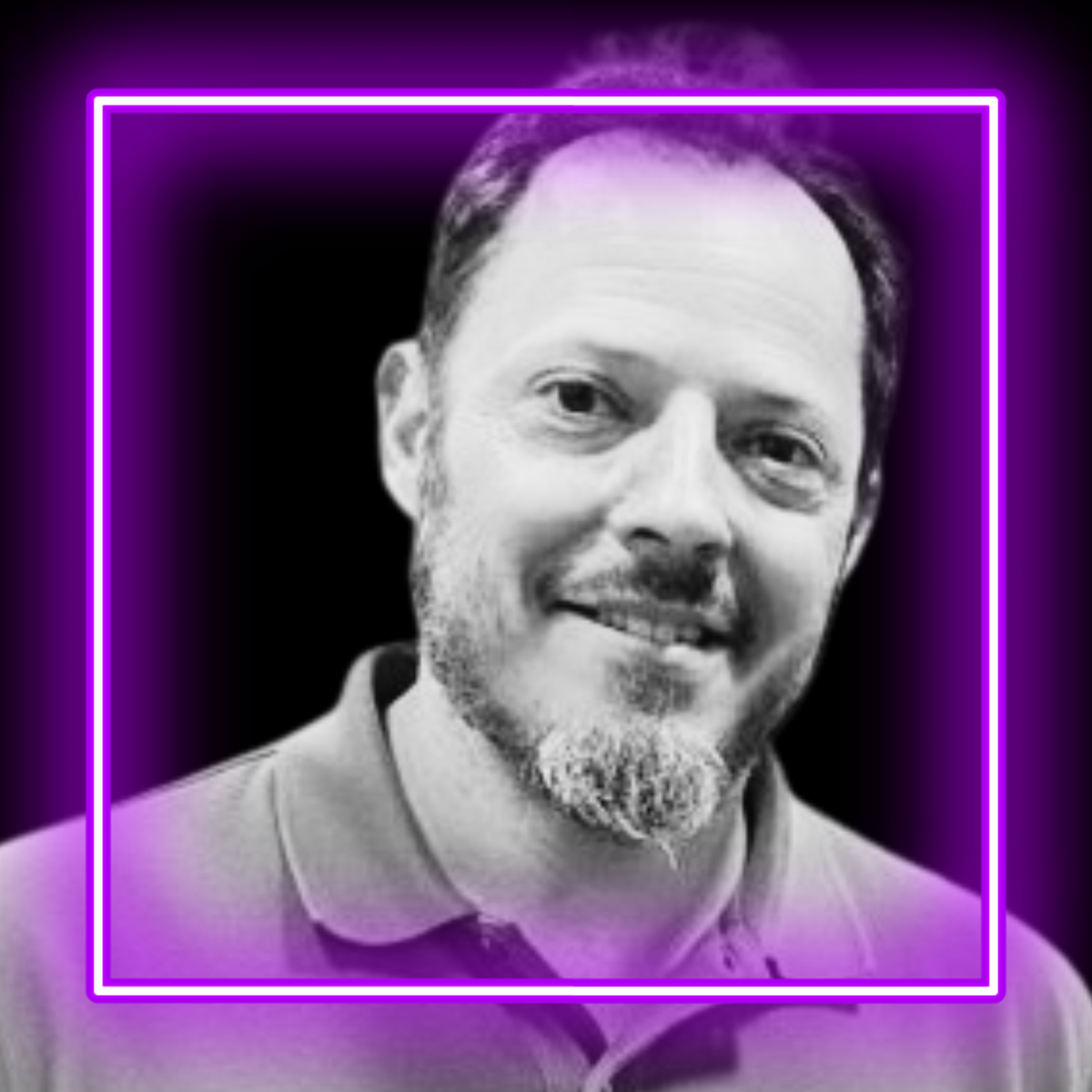
Yosi Shamay, PhD, Associate Professor and Vice Dean for Undergraduate Studies Faculty of Biomedical Engineering, Technion - Israel Institute of Technology
Biography
Yosi Shamay leads the Cancer Nanomedicine & Nanoinformatics Lab at the Faculty of Biomedical Engineering at the Technion. After earning his PhD in Pharmacology and Chemistry at Ben-Gurion University (2013) in polymer-drug conjugates, Yosi spent his postdoctoral years at Memorial Sloan Kettering Cancer Center, where he began using machine learning into nanoparticle design.
In addition to introducing AI and nanoinformatics into drug delivery, he discovered a unique type of nanoparticles with exceptional drug loading with organic dyes. He also pioneered drug delivery through endothelial and epithelial barriers with E-selectin and P-selectin active targeting, radiation guided drug delivery, electroporation, and photodynamic therapy. He published multiple times in top journals such as Nature Materials, Science Translational Medicine, Nature Materials Reviews, Nature Communications and more.
Outside the lab, Yosi creates electronic music under the name Capsula and enCAPSULAte, releasing albums every four years that explore philosophical and scientific themes within electronic music from Alan Watts to Douglas Hofstadter
Interview
NanoSphere: Tell us a bit about yourself—your background, journey, and what led you to where you are today.
Yosi: My journey actually started with the choice of studying BS’c in Chemistry (2002) where I was highly interested in hydrogen fuel as alternative energy source. At the end of the last year my mother was diagnosed with colorectal cancer and I wanted to know everything about it and decided to do masters in Pharmacology. My training then moved across disciplines polymer chemistry, molecular pharmacology, and cancer biology but the main fascination early on was the story of Paul Ehrlich and the Magic Bullet analogy so early in the beginning of 20th century and still it was so relevant and an unmet need.
Over time, our lab evolved toward integrating computational methods with experimental models. We now combine 3D spheroid systems, high-throughput screening, nanoparticle engineering, and AI-based analysis to design combination therapies that account for penetration, resistance, and temporal sequencing. We're trying to build therapies that respect cancer's complexity instead of pretending it away.
I My journey has been less about shifting fields and more about connecting them. The common thread is complexity—and figuring out how to work with it rather than reduce it prematurely. Also, I make electronic music. It's surprisingly relevant—both involve building complex systems from simple elements and hoping they create something coherent when they interact. Sometimes they do.
NanoSphere: Where does AI meaningfully change nanomedicine today—and where is it still aspirational? How do we ensure real translational impact?
Yosi: For me, AI became real the moment it solved a problem I had struggled with for more than six months. I couldn’t understand why drugs with very similar physicochemical properties—charge, size, hydrophobicity—behaved completely differently inside nanoparticles. When I applied machine learning, I experienced a genuine “wow” moment. Within minutes, the pattern became obvious. That insight eventually led to a publication in Nature Materials (2018).
That experience changed how I think about complexity. AI doesn’t replace scientific intuition—it extends it.
Today, AI meaningfully changes nanomedicine in several operational areas:
1. Prediction of nanoparticle properties.
Machine learning can now predict particle size, stability, surface charge, and even aspects of biodistribution based on formulation parameters and molecular descriptors. This reduces empirical trial-and-error and accelerates optimization.
2. Active targeting and protein engineering.
With tools such as AlphaFold3 and generative protein design platforms (e.g., Boltz-1 and related models), we can begin designing binders de novo—proteins engineered not only to recognize tumor markers, but potentially to cross biological barriers more efficiently. This shifts targeting from screening-based discovery to design-driven engineering.
3. Hypothesis generation and literature mining.
The biomedical literature is now too vast for any individual to synthesize effectively. AI systems can extract hidden relationships between drugs, pathways, resistance mechanisms, and delivery strategies. This allows us to identify non-obvious combinations and mechanistic synergies.
4. High-complexity therapeutic design.
This is where our lab focuses much of its energy. Cancer is not a single-variable problem. AI enables ranking of multi-drug regimens based on mechanistic complementarity rather than exhaustive pairwise screening. It also helps optimize formulation parameters, delivery sequences, timing, and scheduling—areas where combinatorial space becomes impossible to navigate manually.
Where AI remains aspirational is in true clinical predictability from design principles. We can model nanoparticles and rank combinations, but reliably predicting patient-response still beyond current capability. I believe we will see digital patient simulations and digital cells/organism but we might need to wait for quantum computing.
There is an important point which I want to emphasize about AI. We must lead AI models, not follow them blindly. Even the most reliable If we surrender scientific judgment to algorithmic output, we risk optimizing the wrong objective. The role of the scientist is not diminished in the AI era it becomes more critical. We must define the right questions, choose the right constraints, interpret outputs critically, and decide when a model is misleading. AI is a powerful amplifier, but it still requires human direction. When I make music with AI, I dont use one prompt to make one song, I lead the AI with 200-300 prompts to get my vision accurately. The future of nanomedicine will not belong to those who simply follow blindly the output of AI tools, but to those who know how to truly guide them.
NanoSphere: What core assumptions in preclinical nanomedicine need re-examination?
Yosi: Several assumptions deserve critical reconsideration are actually now are considered a common truth: The universality of the EPR effect, 2D cell culture as a sufficient efficacy screen in cancer and monotherapy-first thinking. I will suggest a couple of new ones:
Small Molecules are Old News
There is enormous excitement around lipid nanoparticles and nucleic acid therapeutics and rightly so. But in that momentum, we risk overlooking or neglecting small molecules. Small molecule delivery is often viewed as old delivery science with the same reformulating of the same drugs like doxorubicin and paclitaxel. Meanwhile, there are thousands of modern small molecules kinase inhibitors, epigenetic modulators, PROTACs, molecular glues and metabolic regulators that have not been fully explored in intelligently designed delivery systems. We have so much more to do with small molecules especially with AI and design of optimal, complex nanomedicine. The future should not be framed as LNPs versus small molecules. It may lie in combining them together even within the same particle.
NanoSphere: If there’s one key message or insight you’d like to share with readers about the future of nanomedicine, what would it be?
Yosi: "We must lead AI, not follow it blindly."
Yosi`s references
- Lab website: https://yosishamay.wixsite.com/shamaylab
- LinkedIn: https://www.linkedin.com/in/yosi-shamay-061a8836/
- Hub for AI tools for Nanomedicine: https://ai-nano-hub-lorentz-a0183567.base44.app/
My Science Inspired Music (Bandcamp):
- Youtube channel: https://www.youtube.com/@TheEncapsulated
- https://encapsulatedcapsula.bandcamp.com/album/strange-loops-encapsulated