Raymond Schiffelers, Professor of Nanomedicine, UMC Utrecht, VP Preclinical R&D Nanocell Therapeutics
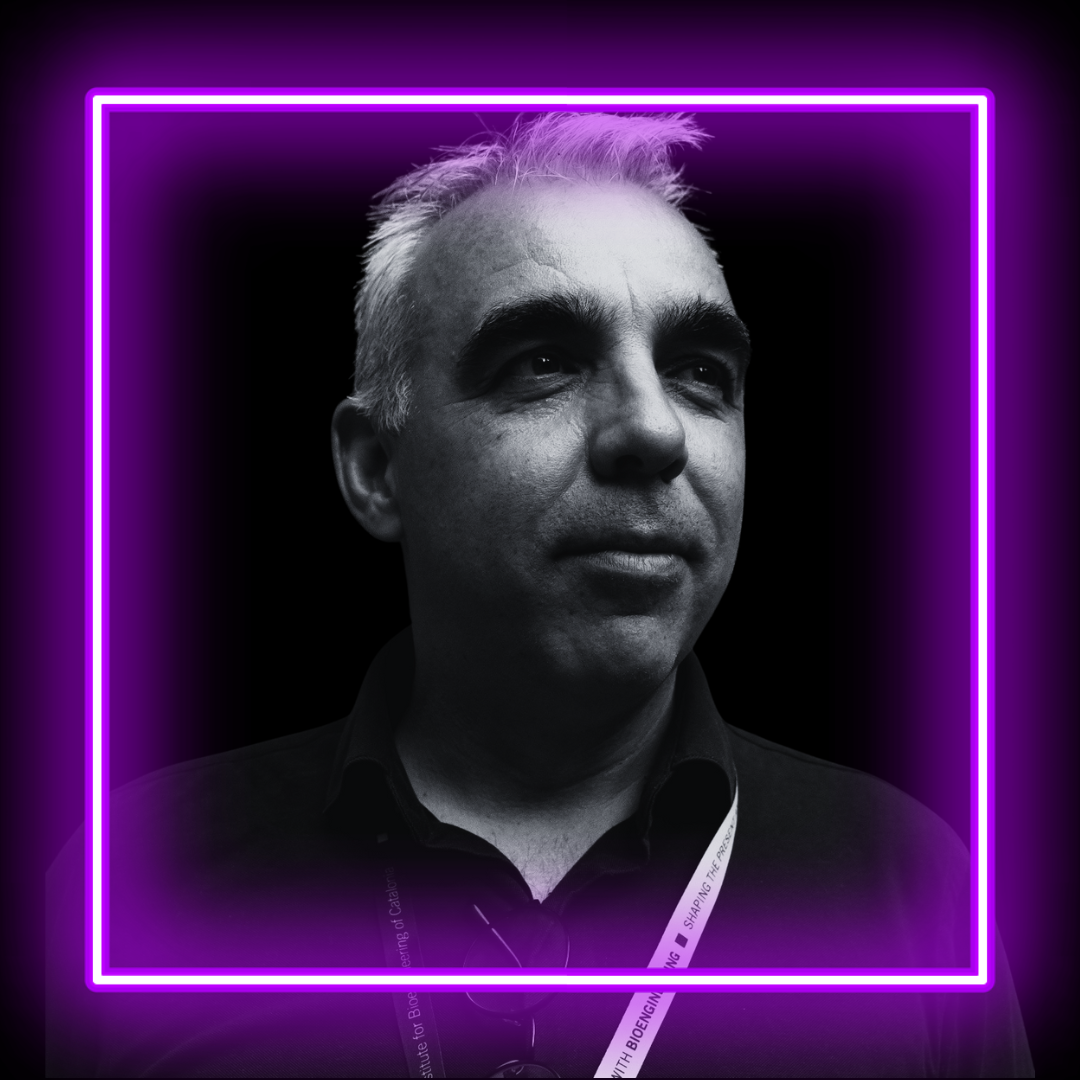
Raymond Schiffelers, Professor of Nanomedicine, UMC Utrecht, VP Preclinical R&D Nanocell Therapeutics
Biography
Raymond Schiffelers studied Bio-Pharmaceutical Sciences at Leiden University (1989-1995). He did his PhD at Erasmus University Rotterdam on liposomal targeting of antimicrobial agents (1996-2001). Subsequently he became post-doc at Utrecht University working on liposomes targeting tumor vasculature. In 2002-2003, at Intradigm Co (USA) he moved to delivery of RNA. After his return to Utrecht University he became assistant and then associate professor. He received an ERC Consolidator Grant in 2010 to investigate extracellular vesicles as biological drug delivery systems for RNA. After he moved to University Medical Center Utrecht in 2011, he became professor of nanomedicine working on bio-inspired and synthetic drug delivery systems. He coordinates a H2020 project (EXPERT (15 M€), a Horizon Europe project, NANO-ENGINE (3 M€), and an NWA-ORC project NANOSPRESSO-NL (9 M€), all devoted to RNA delivery. He is founder of EXCYTEX-an extracellular vesicle-based company. Since 2021, he also works part-time for Nanocell Therapeutics as VP Preclinical R&D and has been elected vice-president and later president of the European Technology Platform Nanomedicine from 2019-2025. He was awarded an ERC Advanced Grant in 2025 to revisit the academic aspects of Nanocell’s lead clinical candidate.
Interview
NanoSphere: Tell us a bit about yourself—your background, journey, and what led you to where you are today.
Raymond: With one exception, a project on atherosclerosis at SmithKline & Beecham in Welwyn, my entire scientific life has really been about nanomedicine. I came into the field through liposomes, at a time when PEGylation had just been introduced. That was a genuine turning point. Until then, liposomes were mostly seen as macrophage-targeting systems that disappeared into the liver and spleen. PEG suddenly opened up the idea that you could control circulation time and distribution, and that maybe nanomedicines could do more than just end up in macrophages. That was an exciting time.
For the next ten to fifteen years, I worked mainly on small-molecule drugs. At some point I realized I had encapsulated almost every major drug class you can think of. Preclinically, this often worked quite well. We could take old drugs and make them safer, better tolerated, sometimes even more effective. But conceptually, the field started to feel boxed in. Active targeting rarely delivered what it promised, and in the end we were still largely governed by the passive distribution of PEGylated liposomes. We were improving drugs, not really changing what was possible.
Nucleic acids looked like the obvious next step. Biologically, the promise was huge, but delivery was painfully difficult. One project I’m still very proud of is the work we did at Intradigm Co in Washington DC, using RGD-PEG-PEI to deliver siRNA to angiogenic endothelium. It worked, but it also took an enormous amount of effort. Batches failed, efficiency was low, and every small change mattered.
By around 2010, it felt like we were stuck. PEG-liposomes for small molecules had matured, but there was little conceptual room left. Active targeting seemed difficult to master. For larger, more complex biomolecules, the need for delivery was even greater, but our tools were simply not good enough. That was what pushed me toward extracellular vesicles. The idea was (on hindsight) naive in its simplicity: nature has already figured out how to move biological molecules between cells, why not learn from that?
Of course, that turned out to be far from straightforward. Extracellular vesicles are messy. They are packed with biologically active components, and if you put them on cells, something will always happen, but figuring out what and why is hard. Loading cargo in a controlled way was challenging, and from a pharmaceutical perspective, reproducibility and definition were constant concerns. Scientifically fascinating, but not an easy road to translation.
The real breakthrough, came with the introduction of ionizable lipids by the Cullis lab. Suddenly, lipid nanoparticles could actually deliver nucleic acids into cells efficiently. And molecular biology kept on exploding at the same time, CRISPR, new DNA formats, stabilized mRNA, circular RNA. For the first time, to me it felt like delivery technology and biology started moving forward together. Now we are at a time when we can truly partner with molecular biologists and clinicians to bridge potential and therapeutic need.
NanoSphere: NanoCell Therapeutics is advancing a DNA-based, non-viral in vivo gene therapy platform. From your perspective, what are the biggest hurdles in moving such a novel modality from preclinical success to early clinical trials? From your dual role in academia and biotech, how do you see the role of LNPs evolving — are we entering a post-LNP era, or just scratching the surface of their capabilities?
Raymond: From my perspective, the field has matured very suddenly. For a long time, lipid nanoparticles were seen as relatively blunt instruments—useful, but largely passive. Over the past few years, that has changed in a fundamental way. Active targeting has moved from something that “sometimes works” to something that is genuinely dependable if you design it properly. That shift is important, because it is what makes in vivo cell engineering a realistic goal rather than a conceptual exercise.
The biggest hurdles in moving a DNA-based, non-viral in vivo gene therapy platform toward the clinic are therefore no longer the basics of formulation or delivery per se. The real challenge now lies in the level of intervention we are aiming for. Generating a CAR-T cell in vivo is not just about getting nucleic acids into a cell; it is about hitting the right cell, in the right state, with the right genetic payload, and having that payload behave exactly as intended.
That immediately exposes limitations in the available toolbox. Human T-cell targeting ligands are still relatively scarce, and many of the best binders are highly context-dependent. At the same time, the therapeutic entities we designs are inherently difficult to study in animals. You end up in a situation where both the targeting ligand and the therapeutic construct are human-specific, while the immune system in your preclinical model is anything but. As a result, assessing toxicity, persistence, and efficacy in a way that truly predicts the clinical situation remains challenging.
On top of that come the more familiar hurdles, particularly from an academic perspective: reproducibility, robustness, and scale-up. As systems become more complex, they also become more sensitive. Translating something that works beautifully at small scale into a process that is reliable, manufacturable, and transferable is non-trivial and often underestimated.
What is truly exceptional, however, is how far we have already come. Achieving in vivo generation of functional CAR-T cells using a non-viral system would have sounded unrealistic not that long ago. Reaching this point required delivery chemistry, molecular biology, immunology, and a great deal of hard work. It is very much a team achievement and represents a genuine step change rather than an incremental improvement.
As for the broader question of whether we are entering a post-LNP era, I see it very differently. I think we are only just scratching the surface of what LNPs can become. They are evolving from delivery vehicles into programmable systems capable of integrating targeting, timing, payload combinations, and biological logic. In that sense, LNPs may play a role similar to that of antibodies decades ago: not a single product, but a foundational technology that enables entire classes of therapies we are only beginning to imagine.
NanoSphere: You’ve worked at the interface of academia, industry, and European innovation policy—as VP Preclinical R&D at NanoCell Therapeutics, as former president of the European Technology Platform Nanomedicine, and through your ERC Advanced Grant revisiting the academic foundations of a clinical candidate. How do you see public–private partnerships accelerating innovation, and why is closing the loop between discovery, translation, and back-to-academia so important for the field?
Raymond: I believe that the real strength of innovation sits at the interface between academia and industry, not on either side alone. Academia is incredibly good at asking difficult questions, following unexpected observations, and revisiting assumptions. Usually in a single PhD project at a time, a project that is interrupted by mandatory courses, committee meetings, abstract deadlines, teaching, safety trainings, and ethics forms. Industry, on the other hand, brings focus, scale, and the discipline needed to turn ideas into something that can actually reach patients. Within Nanocell we work with ten people to push one particle forward, every week comes with progress. When those two worlds are properly connected, you get something much more powerful than either can deliver on its own.
The ERC Advanced Grant was a unique chance to close the innovation loop. By revisiting the academic foundations of Nanocell’s lead clinical candidate, we can ask questions that are very hard to address in a purely industrial setting: why certain things work, where assumptions break down, and whether we can formulate new design rules for future applications.
Public–private partnerships help bring curiosity and responsibility together, and keep ambition grounded in what can actually be done. They give space to think long term, while staying connected to what ultimately matters for patients. For nanomedicine this kind of back-and-forth between academia and industry should really be part of the way we work.
NanoSphere: If there’s one key message or insight you’d like to share with readers about the future of nanomedicine, what would it be?
Raymond: What excites me about in vivo cell engineering is that it’s finally gaining momentum, driven by a clearer understanding of where biology says no and how to design systems that get a yes.