Rajendra Prasad, PhD, Assistant Professor, School of Biochemical Engineering, IIT (BHU), Varanasi
Rajendra Prasad | PhD, Assistant Professor, School of Biochemical Engineering, IIT (BHU), Varanasi
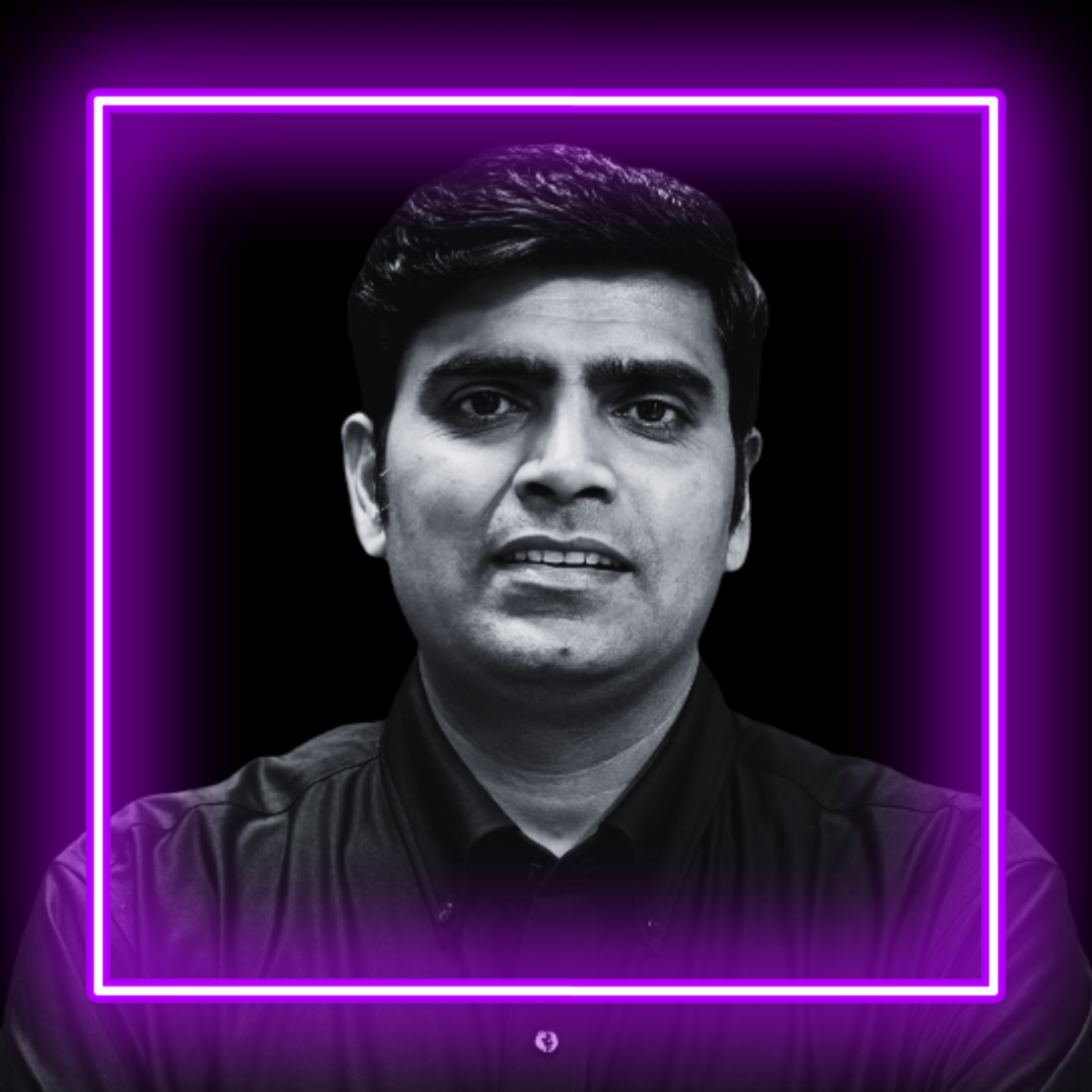
Rajendra Prasad,PhD, Assistant Professor, School of Biochemical Engineering, IIT (BHU), Varanasi
Biography
Rajendra Prasad is an Assistant Professor at the School of Biochemical Engineering, IIT (BHU) Varanasi, India. He is leading the Bright-NanoGhost group for early-stage CANCER diagnosis and therapeutics. Rajendra has completed postdoctoral training at Tufts University, USA; Technion-Israel Institute of Technology, Israel; NOVA Medical School, Portugal; and IIT Bombay, India. Rajendra obtained a PhD degree from CSIR-NCL, Pune, India.
He has published high impact top tier journals like Signal Transduction and Targeted Therapy (Nature, IF 80.1), ACS Nano (ACS, IF 16.0), Nano Letters (ACS, IF 9.1), Matter (Cell Press, IF 17.5), Journal of Controlled Release (Elsevier, IF 11.4), Adv. Funct. Mater. (Wiley, IF 19.9), Bioconjugate Chemistry (ACS, IF 3.9), Adv. Healthcare Mater. (Wiley, IF 11), etc. Rajendra holds more than 30 National and International Patents (more than 18 are granted/or published), 8 trademarks and 2 Edited Books. Rajendra has received multiple prestigious fellowships such as PBC, JSPS, IPDF, SAAS and holds membership in the World Molecular Imaging Society, American Association for Cancer Research, and Royal Society of Chemistry. His recent publication with pioneers of the nanomedicine field, such as Bob Langer, Dan Peer, João Conde, Twan Lammers and Teri Odom has received huge attention.
Rajendra is also serving as an Associate Editor at Nanotheranostics (IVYSPRING), Early Career Advisory Board Member at Nano Letters (ACS), Editorial Board Member at npj Imaging (Published by Nature) and Guest Editor at Nanoscale (RSC).
Interview
NanoSphere: Tell us a bit about yourself—your background, journey, and what led you to where you are today.
Rejendra: My path began in a small village (Jirota, Karauli) in India. During high school, I was introduced to the field of biology, which made me curious to get a degree in medicine. However, instead of medicine, I pursued a degree in the sciences due to heavy financial challenges. I think my interest in medicine led me to pursue a research career. During my PhD, I was introduced to the fascinating world of cancer nanomedicine, which made me curious to find better solutions for human healthcare. Hence, my PhD training has shaped my scientific journey.
Luckily, I had the opportunity to work with very supportive postdoctoral mentors. With a foundation in chemistry, stepping into the world of biomedical engineering has been both fascinating and transformative. This transition was inspired and nurtured by one of my postdoctoral mentors, who showed me the exciting possibilities at the interface of chemistry, engineering, and medicine. I understood that molecules could be precisely assembled at the nanoscale and engineered to perform highly specific functions within biological systems. The idea that I could design matter at such a small scale to achieve meaningful biological outcomes was truly captivating. This realization sparked my interest in developing integrated nanoscale platforms that bring together imaging and therapeutics, ultimately shaping my journey toward nanomedicine.
Today, my research has evolved to an exciting frontier where I engineer cells, including tumor cells, and integrate them with organic fluorophores at the nanoscale, creating innovative cellular nanoplatforms that I call Bright-NanoGhosts. Looking back, my journey has not been a straight path, but a gradual evolution driven by curiosity, scientific questions, and an unwavering spirit of hard work. At every stage, I encountered a new challenge, learned something new, and discovered another piece of the puzzle. Today, I am bringing these seemingly different pieces together—chemistry, nanotechnology, biomedical engineering, and cancer biology—with a larger vision: to develop innovative technologies that can translate scientific discoveries into meaningful advances in cancer imaging and therapeutics.
NanoSphere: Your career has taken you across institutions and research environments in India and the US. How have these different scientific ecosystems shaped the way you think about collaboration- and what does effective collaboration need to look like when a technology has to move from laboratory towards clinical use?
Rejendra: For me, collaboration works best when everyone brings something genuinely different to the table. I believe that good science cannot happen in isolation. Every place I worked at had a slightly different way of approaching a problem; they had different expertise, different infrastructure, and even different ways of thinking about the same question. Moving between these environments made me more open to learning from people outside my immediate field. And when the ultimate goal is clinical translation, that connection between basic science and the actual clinical problem becomes especially important.
For me, the best collaborations have always been the ones where there is a genuine scientific question that brings people together, rather than simply collaborating for the sake of producing a paper. Everyone should bring something that the others don't have, but there also has to be a willingness to learn from each other. Ultimately, if the goal is clinical translation, I think we have to keep asking a very simple question throughout the process: What problem are we actually trying to solve, and will what we are developing make a meaningful difference to the patient? That perspective, more than the institution or the country you are working in, is what I think makes a collaboration truly effective.
NanoSphere: Much of your research brings together imaging and therapeutic technologies. Where do you see molecular imaging having the greatest potential to change how we design, monitor, and personalize nanomedicine-and what are the barriers that still prevent that potential from reaching the clinic?
Rejendra: I think the biggest potential of molecular imaging is identifying disease at an early stage by sending molecular or nanoprobes to the targeted site. This approach can tell us what is actually happening within the disease site by providing the molecular changes/signature. Further, we can see where the imaging agents/probes are going, how much of them are reaching to the disease site, and potentially how the cancer site is responding towards them. So, the molecular signature of the disease site can help us to design better therapeutic platforms and, eventually, choose the right treatment for the right patient. But there is still a gap between what we can demonstrate in the laboratory and what we can realistically do in patients. In reality, the disease site is much more complex and challenging than the model we design.
Therefore, imaging or therapeutic platforms (known as nanomedicines) that perform very well in a cell culture or animal model may behave very differently in humans. Moreover, there are issues of safety, reproducibility, large-scale manufacturing, batch-to-batch variability, etc. So, I believe we need to take a dual approach-engineering clinically relevant nanomedicines while simultaneously gaining a deeper understanding of the disease microenvironment that ultimately governs their performance and therapeutic efficacy. Solving these issues can help us understand the whole journey of a nanomedicine and make the approach more precise and, hopefully, more useful in clinical studies and practice.
NanoSphere: If there’s one key message or insight you’d like to share with readers about the future of nanomedicine, what would it be?
Rejendra: Today, nanomedicines hold the promise of becoming the “magic bullets” of modern medicine. The real challenge is not simply making them smarter, but understanding how they behave in the human body and translating that knowledge into clinical success. For me, true progress lies in bridging the lab and the clinic-turning scientific innovation into technologies that genuinely transform how cancer is diagnosed and treated.
Rejendra's references
- https://brightnanog.com
- https://pubs.acs.org/nalefd/pages/Editorial_Board
- https://www.ntno.org/editorial
- https://scholar.google.com/citations?user=X0kiDpAAAAAJ&hl=en
- Rajendra-Voices of Nanomedicine: Blueprint Guidelines for Collaboration in Addressing Global Unmet Medical Needs, ACS Nano (2025) 19 (3): 2979–2991