Matthias G. Wacker, Professor of Biopharmaceutics, KU Leuven
Matthias G. Wacker, Professor of Biopharmaceutics, KU Leuven
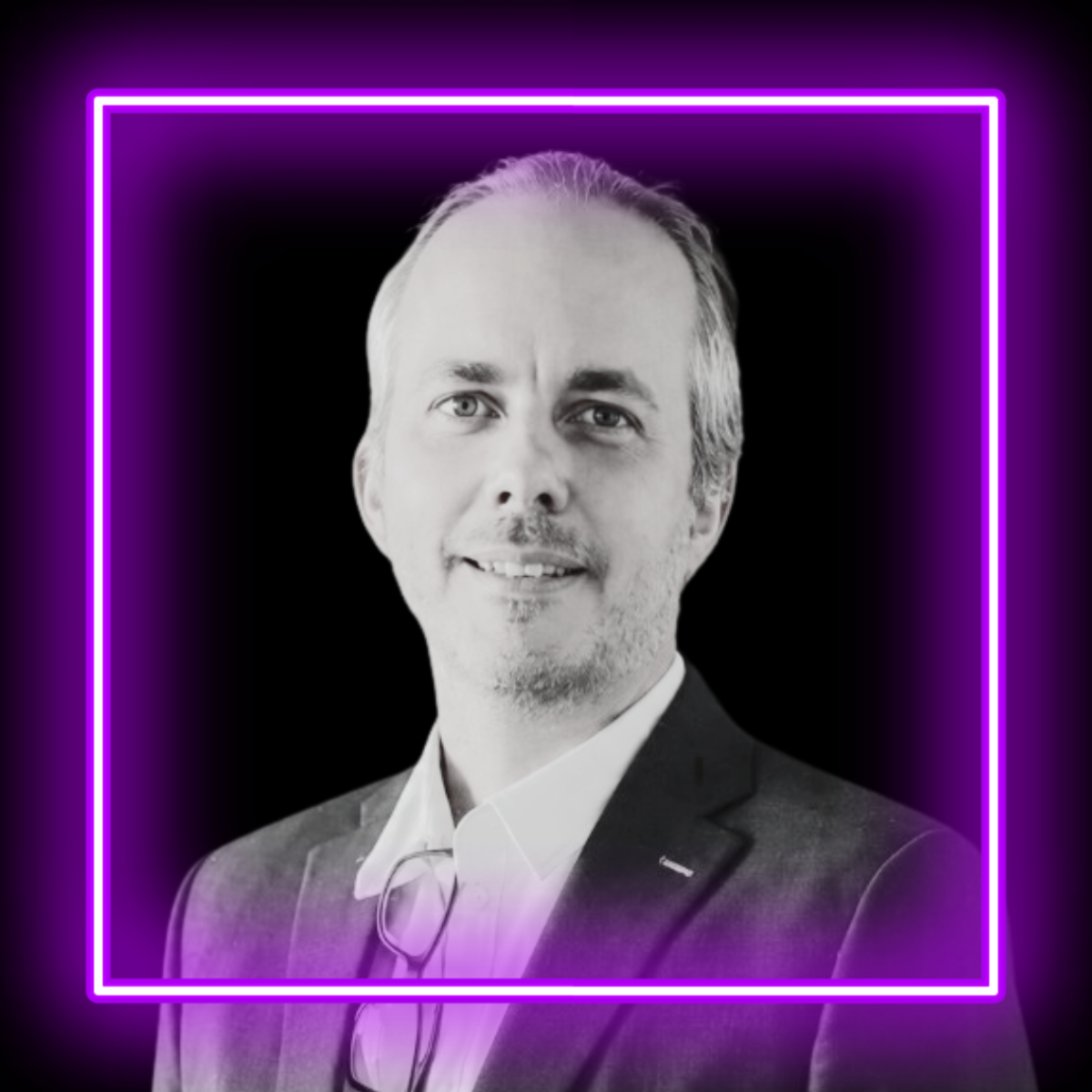
Matthias G. Wacker, Professor of Biopharmaceutics, KU Leuven
Biography
Matthias G. Wacker is Professor of Biopharmaceutics at KU Leuven, working at the interface of drug delivery, nanomedicine, and biopharmaceutics. Trained in pharmaceutical technology at Goethe University Frankfurt, he built his scientific foundation in nanomedicine design, mechanistic drug release and data science.
Before joining KU Leuven, he led formulation development at the Fraunhofer Institute for Molecular Biology and Applied Ecology (IME) and later established an internationally visible research program at the National University of Singapore. His work connects academia, industry, and regulatory science.
He studies liposomes, lipid nanoparticles, and long-acting injectables as dynamic systems that undergo biomolecular and mechanical transformation. By combining advanced in vitro platforms with computational modeling, his group develops the biopredictive tools and mechanistic IVIVC strategies required to translate complex generics and novel nanomedicines from lab design to clinical reality.
Interview
NanoSphere: Tell us a bit about yourself—your background, journey, and what led you to where you are today.
Matthias: I studied Pharmacy in Frankfurt. My father is a pharmacist, so the profession was not exactly unfamiliar territory. But early on, I realized that I was less drawn to daily patient care and more to the science behind medicines: how they are designed, formulated, and made to work. At first, I imagined this would lead me into industry.
During my PhD, I worked on antibody-targeted nanoparticles, a classic nanotechnology topic at the time. Toward the end of my third year, my supervisor moved, and I stayed as a postdoc to build a small group of my own. I had already interviewed with several companies. But I found myself increasingly attracted to the academic puzzle: choosing a difficult question, following it, and working through it with students. That combination of intellectual freedom and mentorship was hard to give up.
A major influence during this period was Jennifer Dressman. She came from a different scientific field, and that broadened my perspective. It moved me beyond nanotechnology alone and connected my long-standing interest in programming and data science with biopharmaceutics and kinetics. Around that time, I also realized what fascinated me most: the biophysics of drug delivery systems. Shear, pressure, relaxation processes, and the physical forces that decide how formulations behave. While much of the field rushed toward cellular mechanisms, I became interested in what happens before a system ever reaches the cell. It is a counter-current approach, but skipping the physics is often why elegant concepts fail.
After several years as a postdoc, I became department head at Fraunhofer. Industry-oriented research largely set the agenda there, and I felt very much at home. Real-world problems are wonderfully unforgiving; they do not care much for elegant theories unless they work. But precisely for that reason, they often force us to look deeper and create a strong symbiosis with academic research. I was even offered a joint professorship with my alma mater.
Then a delegation from the National University of Singapore visited Frankfurt. Singapore is, in many ways, a fast-moving ship: ambitious, disciplined, and very clear about its direction. One of their most independent and well-known industry-facing researchers, Paul Heng, was approaching retirement, and they were looking for someone who could bring industry expertise to the table. Somehow, that table ended up including me.
I spent nearly seven years in Singapore, which was life-altering both scientifically and personally. The city is often described as a place of the future, and living there gave me a deep appreciation for the discipline and intent behind that vision. The collaborations and friendships from that time remain very important to me.
In January, I began a new chapter at KU Leuven. It is a remarkable place: historically rich, scientifically strong, and genuinely forward-looking. For me, it is an ideal environment to continue building bridges between fundamental science, biophysical understanding, data-driven modeling, and real-world translation. That, in the end, remains the puzzle I enjoy most.
NanoSphere: Your group integrates in-vitro datasets into biopredictive simulations. What are the two or three most common failure points when translating in-vitro nanomedicine readouts into in-vivo performance, and how do you design experiments differently when the endpoint is model credibility rather than publication novelty?
Matthias: Most modeling errors don’t come from flawed mathematics. They come from something far more human: the data we choose and the assumptions we quietly bring into experiments. Modern tools make it easy to build complex models, but they also hide thousands of assumptions. If the input is not clinically meaningful, the output won’t be either. It just looks more sophisticated.
Once credibility becomes the goal instead of novelty, the philosophy changes. You stop asking only what is biologically interesting and start asking what is clinically observable. If the clinic measures plasma concentrations, then in vitro systems must generate parameters that connect mechanistically to plasma PK.
In my group, we prefer lean mechanistic models with two or three validated processes over elaborate, over-parameterized frameworks full of untested pathways. This is also where machine learning fits into our workflow. We don’t use AI as a buzzword to chase trends or mask weak data. Instead, we deploy hybrid computational frameworks where machine learning can provide real support to our mechanistic models. But only when the underlying dataset is robust enough to let the data speak for itself.
Protein corona research is a good example. It is often presented as a predictor of biodistribution, sometimes with AI layered on top. But sophisticated analytics and AI cannot compensate for fundamentally weak or undersampled datasets. When we layer complex algorithms over shaky biological data, you don't get better predictions, you just get highly sophisticated errors.
I’ve lost count of how many times I was told that focusing on drug release was a dead end for a nanomedicine researcher because the in vivo environment is simply too complex to mimic. But I’ve always believed that elegant hypotheses must bow to hard data. When we finally introduced serum into our in vitro assay, a chaotic, vague IVIVC suddenly collapsed into a flawless, straight line with an R² > 0.9. The data didn't just speak, it shouted. My lesson from that was simple: block out the noise and follow the data. That is how you avoid the pitfalls that stall translation.
NanoSphere: When the same dataset is used by academia, industry, and regulators, what most determines whether it can actually support decisions, and what do sponsors tend to underestimate about the effort needed to make nanomedicine data reliable and defensible?
Matthias: The same dataset can look very different to academia, industry, and regulators.
In academia, novelty and mechanistic insight often dominate because publication and visibility matter. This drives deep, specialized science. The “necessary side quests,” like robust analytical methods or validation work, are sometimes weaker. When I look for practical analytical methods, I often check whether industry authors are involved.
Industry and regulators judge data differently. Regulators focus on safety and evidence. Companies must balance efficacy, safety, manufacturability, cost, and timing. Their question is rarely “Is this interesting?” but rather “Is uncertainty low enough to make a decision?”
At a recent industry conference, one speaker summarized development reality well: existing treatment performance, pricing, and competition often drive strategy more than elegance of science. Competition sets the clock. It defines how quickly something must succeed in the real world.
Academia often asks how delivery systems can become more advanced. Product development asks a more pragmatic question: what works most reliably? For nanomedicine, we therefore always need to ask the hard question: why nano? If a simpler, conventional platform achieves the same clinical outcome more robustly, it will, and should, outperform a complex nanomedicine. Simplicity matters because it often translates into more predictable manufacturing, clearer mechanisms, and more reliable clinical effects.
In the end, data creates value when it is fit for purpose, reproducible, and linked to outcomes that matter. That should be common ground. The difference is simply which questions each group asks first.
NanoSphere: If there’s one key message or insight you’d like to share with readers about the future of nanomedicine, what would it be?
Matthias: Everything flows, everything transforms. It might sound like a phrase from a fortune cookie, but it is the beating heart of biopharmaceutics.
We often treat nanomedicines as static objects moving unchanged through the body. They aren't. They are highly dynamic molecular assemblies in a constant state of physical transformation. If we want to translate these therapies faster, we have to stop looking at them through a static lens and start mapping this physical flux in real time. And that is exactly what makes this work so fascinating; a puzzle with a million moving parts over time.