Dr. Marius Schmid, CEO of ZentriForce Pharma Research GmbH
Dr. Marius Schmid, CEO of ZentriForce Pharma Research GmbH
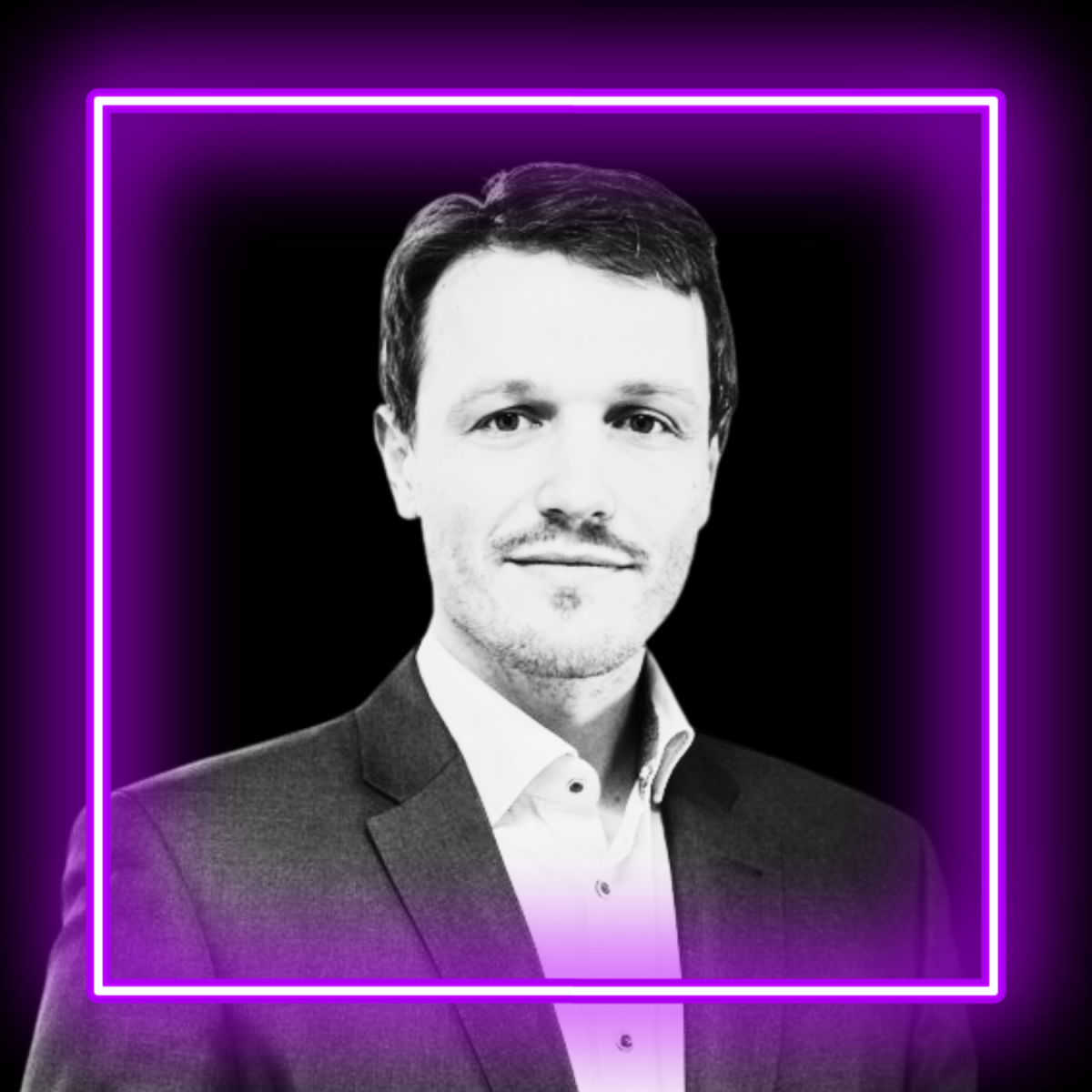
Dr. Marius Schmid, CEO of ZentriForce Pharma Research GmbH
Biography
Dr. Marius Schmid is the co-founder and CEO of Heidelberg-based Zentriforce Pharma Research GmbH, a CRO that specializes in hydrodynamic analysis techniques for biopharma and gene therapy products. He gained extensive experience in the field as a senior scientist and Head of the AUC and AF4 group at Coriolis Pharma and as a post-doctoral fellow at the NCMH in Nottingham.
ZentriForce Pharma is an analytical service provider that specializes in hydrodynamic techniques for biopharmaceutical development. The focus lies on complex biopharmaecutical products and biosimilarity studies.
Interview
NanoSphere: Tell us a bit about yourself—your background, journey, and what led you to where you are today.
Marius: My scientific career has consistently been centered on the analytical characterization of complex systems. I studied chemistry with a specialization in physical chemistry at the University of Konstanz, where I also completed my doctoral research in the group of Helmut Cölfen. My doctoral thesis focused on the combined application of analytical ultracentrifugation (AUC) and asymmetrical flow field-flow fractionation (AF4) for advanced data analysis.
Following my thesis, I continued in academia at the National Centre for Hydrodynamics in Nottingham, where I further expanded my expertise in biophysical characterization, with a particular emphasis on the analytical ultracentrifugation of proteins and carbohydrates.
I subsequently transitioned into the pharmaceutical industry by joining Coriolis Pharma in Munich. During my time there, I progressed to the roles of Senior Scientist and later Group Leader for AUC and AF4 before leaving the company in 2019.
In 2019, my wife and I founded ZentriForce Pharma, a service provider specializing in hydrodynamic analytical techniques for biopharmaceutical development. Our goal was to build a company focused on delivering deep analytical insight into complex biotherapeutics, particularly in areas such as advanced therapy medicinal products (ATMPs) and biosimilarity assessments. As CEO, I oversee the company’s daily operations while also leading its strategic development, with the aim of supporting the growing need for robust and reliable characterization of modern biopharmaceuticals.
NanoSphere: From your perspective, what are the most misunderstood aspects of nanomedicine/gene therapy characterization when moving from academic proof-of-concept to regulated development? You have worked across academia, analytical leadership, and now service provision. How has this trajectory shaped your view on what “good enough” characterization really means for decision-making in nanomedicine programs?
Marius: From my perspective, one of the most misunderstood aspects of nanomedicine and gene therapy characterization is the importance of orthogonal analytical methods. It is unrealistic to expect that any single technique can provide a complete and reliable understanding of complex biological systems. Robust characterization requires a combination of complementary analytical approaches, each contributing different types of information while also compensating for the limitations of others.
In practice, however, many development programs still rely too heavily on a single analytical method, with critical decisions made without sufficient verification through orthogonal techniques. This approach carries significant risk because the results may remain unconfirmed or even misleading. A common strategy is to begin with a minimal analytical toolbox and expand it later during development. In my view, a more effective approach is the opposite: applying a broader range of analytical methods early on and then refining the analytical strategy based on the insights gained.
Throughout my career in academia, industry, and now in analytical service provision, I have worked with a wide variety of drug products, including peptides, proteins, antibodies, oligonucleotides, lipid nanoparticles, liposomes, viral vectors, and other nanoparticle-based systems. This experience has shaped my view that “good enough” characterization is not defined by the use of a single sophisticated method, but by the convergence of evidence from multiple complementary techniques. Only when results are supported by orthogonal methods can they truly inform confident decision-making in nanomedicine development.
NanoSphere: AF4 is often described as “state of the art,” yet still underutilized. In your experience, what does AF4 enable that conventional techniques structurally cannot? How do you see AF4 contributing to mechanistic understanding rather than just improved resolution? What it offers than other techniques not (e.g. compared to SEC MALLS)?
Marius: Asymmetrical flow field-flow fractionation (AF4) remains underutilized despite its considerable analytical potential. One of the main reasons is the complexity of developing robust and reliable AF4 methods. Compared with size exclusion chromatography (SEC), AF4 requires a significantly higher level of expertise, which makes routine implementation more challenging and increases the demand for highly specialized personnel.
Nevertheless, interest in AF4 is steadily growing, particularly with the rapid development of lipid nanoparticle (LNP)–based drug products, where advanced characterization techniques are essential.
A key advantage of AF4 over complementary techniques such as SEC and analytical ultracentrifugation (AUC) is its exceptionally broad size range. AF4 enables the analysis of species spanning from approximately 1 nm to 1 µm within a single experiment.
Additionally, SEC relies on separation via a stationary phase, where interactions between the sample and the column material may influence the observed sample composition. Such interactions can lead to artifacts, including adsorption of specific species, dissociation of oligomers, or even the formation of new species. AF4, by comparison, does not depend on a stationary phase and is therefore considered a first-principles method. For this reason, results obtained by SEC should ideally be verified using orthogonal techniques such as AF4 or sedimentation velocity AUC (SV-AUC), which similarly operates without a stationary phase.
The combination of AF4 with multi-angle light scattering (MALS) detection further enhances its analytical capabilities. This approach not only enables detailed characterization of particle size distributions in nanoparticle-based drug products but also allows for the determination of particle concentration, insights into payload distribution, and quantification of impurities. In the context of LNP-based drug products, AF4-MALS represents one of the most powerful and versatile analytical techniques currently available.
NanoSphere: If there’s one key message or insight you’d like to share with readers about the future of nanomedicine, what would it be?
Marius: The future of nanomedicine will depend not only on innovative materials, but on our ability to accurately characterize complex nanosystems. Advanced analytical methods and transparent data will be essential to translate promising nanotechnologies into safe and effective therapies.