Khair Alhareth, Associate Professor of Pharmaceutical Technology, Université Paris Cité
Khair Alhareth, Associate Professor of Pharmaceutical Technology, Université Paris Cité
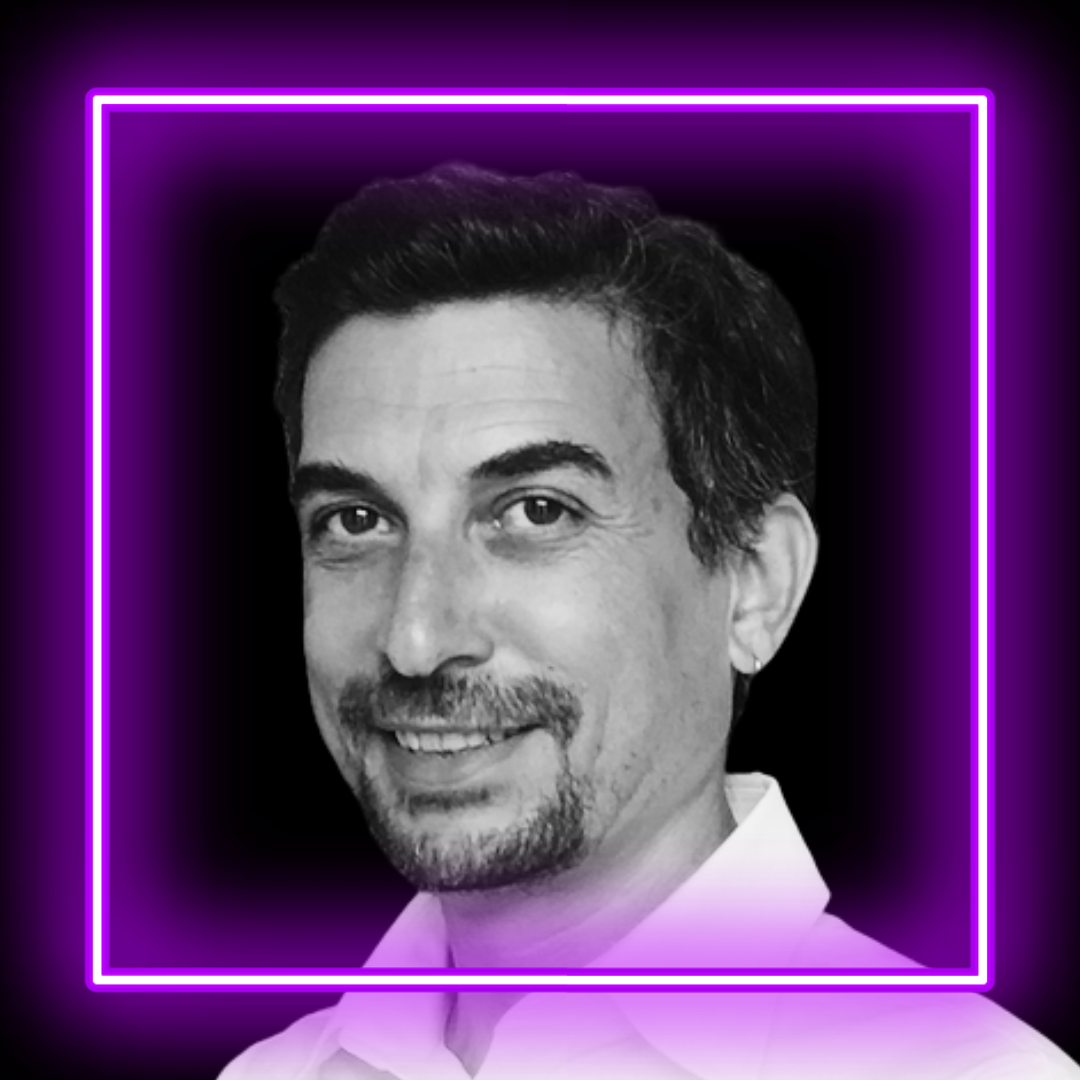
Khair AlHARETH, Associate Professor of Pharmaceutical Technology, Université Paris Cité
Biography
Khair Alhareth is an Associate Professor of Pharmaceutical Technology at the Faculty of Health at Paris Cité University. He conducts his research at the Chemical and Biological Technologies for Health laboratory (UTCBS, CNRS, INSERM). He is also a co-cordinator and member of the consortium of the European Master’s in Nanomedicine for Drug Delivery. After obtaining his pharmacy diploma from the University of Damascus (Syria), he moved to France, where he obtained a Master’s degree in analytical chemistry in 2006 and a PhD in pharmaceutical technology and biopharmacy in 2010, both from Paris Saclay University.
Following his PhD, he worked for four years as an assistant professor of pharmaceutical technology at private universities in Syria and Jordan (International University of Science and Technology and Zarqa University). He then undertook a postdoctoral training at the University of Santiago de Compostela in Spain. He then spent one academic year at Rennes University (France), after which he joined Paris Cité University in 2016.
There, he teaches pharmaceutics and biopharmacy to undergraduates and postgraduates students, conducts his research in the field of nanomedicine, and supervises Master’s and PhD students working on nanomedicine applications such as cancer therapy, gene delivery, and placenta targeting. His research focuses on developing nano-based drug delivery systems using automated processes, advanced technologies, and computational analysis. He integrates automation, microfluidics, and machine learning into his workflow for manufacturing and evaluating nanoparticles to enable faster development and a deeper understanding of the biological potential of nanomedicine.
Interview
NanoSphere: Tell us a bit about yourself—your background, journey, and what led you to where you are today.
Khair: Despite the challenging context, my academic journey was marked by several geographical mobilities (some of which were forced ones) and excellent opportunities. After graduating from the faculty of pharmacy at Damascus University, I started working in a government drug quality control laboratory, where I realised the importance of specialised knowledge and advanced technologies in addressing healthcare challenges. For these reasons, I moved to France to undertake postgraduate studies, and I had the great opportunity to conduct my PhD project on nanomedicine for drug delivery at the Galien Institute of Paris Saclay University, one of the pioneer labs of nanomedicine research. The Galien Institute was led at this time by Prof. Patrick Couvreur and Prof. Elias Fattal, two leading figures in Nanomedicine. I had the chance to learn the basics of nanomedicine at this institution.
In 2010, I returned to Syria, and I started teaching at the Faculty of Pharmacy at IUST University (a private university). However, due to my involvement in the Syrian Revolution and the insecure situation, I was forced to leave my home country. I moved to Jordan, where I worked as an Assistant Professor at the Faculty of Pharmacy of Zarqa University for two years. During this period, I tried to find an opportunity to reintegrate into the nanomedicine research community.
Fortunately, I found an excellent one, a post-doc fellowship at the University of Santiago de Compostela, so I moved to Spain, where I had a transformative experience under the supervision of Prof. Maria Jose Alonso. In her lab, I enjoyed the challenging environment, which was based on cutting-edge projects and the qualified, highly motivated researchers and students. This experience was almost perfect, but due to administrative issues relating to travel documents and residency, I left Spain for France in 2015, where I started teaching in French at Rennes University, and I then succeeded in joining the UTCBS laboratory at Paris Cité University as a temporary teacher and researcher, and I got a permanent position as an associate professor in 2019.
The UTCBS lab offered me the possibility to work on transdisciplinary projects with researchers having very specific knowledge and experience, from materials chemistry to preclinical studies. I then established my project on the use of automation, microfluidics, and Machine learning for nanomedicine development. The continuous support of my lab leader, Dr. Nathalie Mignet, and the diversity of projects and biomedical applications in the lab allowed me to apply my methodological approach to several research projects, including LNPs Development. My passion for advanced technology and recent discoveries drives my research on AI applied to nanomedicine and motivates me to continue supervising and helping young researchers and talented individuals to reach their full potential.
NanoSphere: Your latest work explores machine learning as a tool to predict key quality attributes of mRNA-loaded lipid nanoparticles after post-encapsulation processing. Looking back at your long experience with formulation science, what do you see as the true conceptual shift intoduced by ML in nanomedicine - not as a computational add-on, but as a way of reframing how we understand causality, variability, and decision-making in nanoparticle design?
Khair: Nowadays, AI is present in all aspects of life, and its application in Nanomedicine research seems to be logical and timely. The conceptual shift is essentially in methodology, where AI is currently used to analyse, visualise, and predict characteristics and biological performance of the potential candidate. Nanomedicine is following a standard evolution of a field of science: The Foundational Phase (1980-2000) was to establish the basics of this new field (definition, characterisation, evaluation, and therapeutic potential). Methodology at this time was based on one candidate designed according to a scientific assumption or hypothesis. During the Consolidation Phase (2000-2020), the methodology changed to find correlation or to generate new knowledge.
This second phase allowed the development of a methodology that favours the use of a library of candidates and mathematical correlation and modelling to find a link between a specific characteristic of nanoparticles and a well-defined response (e.g., PEG percentage and cell internalisation). The full integration of AI in Nanomedicine research will be the beginning of the third phase, the Maturity Phase. The research methodology will be changed to include the new tools of AI and recent advancements in machine learning and digitalisation. This will be in alignment with the use of robotics and automation of processes (for preparation and evaluation). In my project, I am working on the implementation of automation and AI in each step of the workflow of nanomedicine development to establish a research environment where decisions are based on data.
NanoSphere: You have worked extensively at the interface of formulation science, biological evaluation, and safety - particularly in sensitive contexts such as prenancy and placental drug delivery. In light of the rapid acceleration of mRNA technologies, how should the field rethink preclinical evaluation frameworks to better integrate potency, toxicity, and long-term safety without slowing innovation?
Khair: The relevance of biological models used for nanomedicine evaluation is one of the important questions of our field, as models used vary in the degree of complexity and the type of information according to formulation functionality and biomedical application. The choice of optimal model became a central issue in some specific questions, like the ability of an mRNA formulation to increase transfection rate or the assessment of transplacental passage of a nano-based formulation.
In some specific contexts, the animal models are not the optimal ones because of a significant difference in biological processes between species. The biological evaluation should be done on several available and relevant models that each one provides a part of the information, and innovative models should be developed thanks to recent knowledge in the related field of science. I believe that the introduction of new models in nanomedicine research is highly needed. Models based on 3D bio printing, organ-on-chips, molecular dynamic simulation, and AI-driven virtual cell models should be optimised and validated to be considered as an alternative (or complementary) to animal models during the preclinical evaluation.
NanoSphere: If there’s one key message or insight you’d like to share with readers about the future of nanomedicine, what would it be?
Khair: Unraveling the full potential of Nanomedicine research could be achieved by integrating the recent discoveries and advanced technologies, such as robotics, organ-on-chips, 3D printing, and microfluidics, in a workflow that supports digitalisation, data curation, and machine learning applications.
Khair's references
- UTCBS LAB, https://utcbs.u-paris.fr/en/home/
- Nanomed master, https://nanomed.u-paris.fr/