Juliane Nguyen, PhD, FCRS, FAAPS, FAIMBE (she/her) Professor and Vice Chair Director of Graduate Admissions - DPMP Division of Pharmacoengineering and Molecular Pharmaceutics Eshelman School of Pharmacy University of North Carolina at Chapel Hill
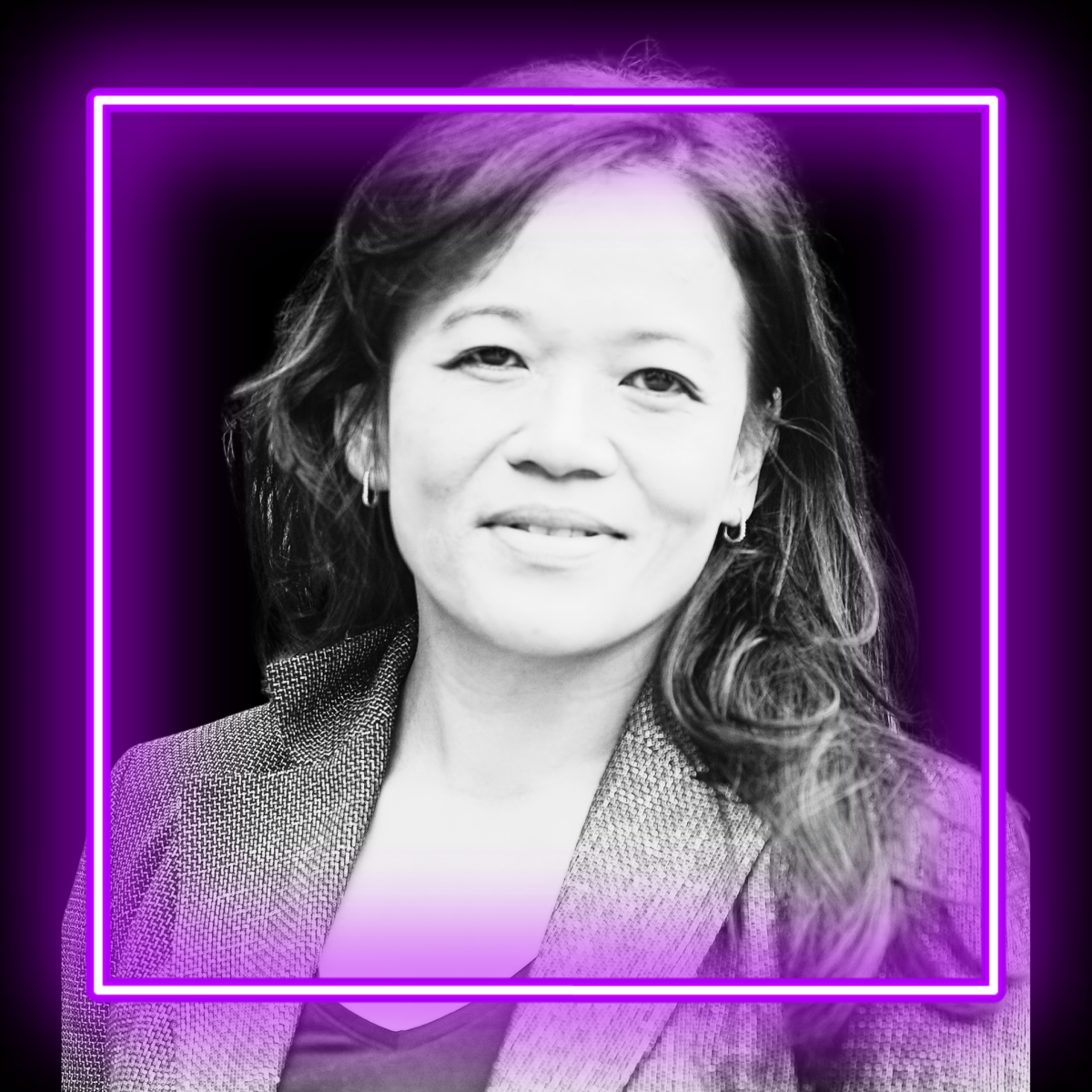
Juliane Nguyen, PhD, FCRS, FAAPS, FAIMBE (she/her) Professor and Vice Chair Director of Graduate Admissions - DPMP Division of Pharmacoengineering and Molecular Pharmaceutics Eshelman School of Pharmacy University of North Carolina at Chapel Hill
Biography
Dr. Juliane Nguyen is Professor and Vice Chair in the Division of Pharmacoengineering and Molecular Pharmaceutics, School of Pharmacy, University of North Carolina at Chapel Hill. She serves as the Director of Graduate Admissions for the DPMP PhD program. Dr. Nguyen leads an interdisciplinary lab to develop innovative and personalized biotherapeutics for cancer, myocardial infarction, colitis, and other diseases by merging cutting-edge molecular engineering with pharmaceutical sciences and bioinformatics. Her work has been published in Nature Communications, Nature Biotechnology, Nature Reviews Bioengineering, Advanced Functional Materials, Biomaterials, Advanced Drug Delivery Reviews, and other key journals. She has overseen a portfolio of research projects totaling more than $21 million.
Dr. Nguyen has received several prestigious awards, including the NYSTAR faculty award, the UB Exceptional Young Investigator award, the NSF CAREER Award (2018), the Biomedical Engineering Society – CMBE Young Innovator Award (2019), and the AAPS Emerging Leader Award (2019). She was the recipient of the Galenus Guest Professorship at ETH Zurich. Dr. Nguyen was named a Fellow of the Controlled Release Society in 2023, a Fellow of the American Institute for Medical and Biological Engineering in 2024, and a Fellow of the American Association of Pharmaceutical Scientists (2024). Dr. Nguyen is passionate about training the next-generation of scientists. She has advised more than 70 trainees (postdocs, PhD students, and undergraduate students). Her trainees have assumed leading positions in academia, industry, and government. She served as a member of the NIH Drug and Biologic Therapeutic Delivery (DBTD) study section (2021-2025). Additionally, Dr. Nguyen is the Executive Editor of Advanced Drug Delivery Reviews, the Associate Editor of CMBE, and serves on the Editorial Board of the Journal of Controlled Release.
Dr. Nguyen has received several prestigious awards, including the NYSTAR faculty award, the UB Exceptional Young Investigator award, the NSF CAREER Award (2018), the Biomedical Engineering Society – CMBE Young Innovator Award (2019), and the AAPS Emerging Leader Award (2019). She was the recipient of the Galenus Guest Professorship at ETH Zurich. Dr. Nguyen was named a Fellow of the Controlled Release Society in 2023, a Fellow of the American Institute for Medical and Biological Engineering in 2024, and a Fellow of the American Association of Pharmaceutical Scientists (2024). Dr. Nguyen is passionate about training the next-generation of scientists. She has advised more than 70 trainees (postdocs, PhD students, and undergraduate students). Her trainees have assumed leading positions in academia, industry, and government. She served as a member of the NIH Drug and Biologic Therapeutic Delivery (DBTD) study section (2021-2025). Additionally, Dr. Nguyen is the Executive Editor of Advanced Drug Delivery Reviews, the Associate Editor of CMBE, and serves on the Editorial Board of the Journal of Controlled Release.
Interview
NanoSphere: Tell us a bit about yourself—your background, journey, and what led you to where you are today.
Juliane: My path began in Germany, where I grew up. As a Pharmacy student at the Philipps-University of Marburg, I discovered a passion for Pharmaceutical Technology, the science behind drug delivery. That interest led me to become a licensed pharmacist and later earn a PhD in Pharmaceutical Technology with Dr. Thomas Kissel. Curious about research in the U.S., I moved to San Francisco for a postdoctoral fellowship in bioengineering at UCSF. A fellowship from the Deutsche Forschungsgemeinschaft made this possible, and I couldn’t have asked for a better mentor than Dr. Frank Szoka, a pioneer in liposomal drug delivery. Under his guidance, I worked on developing lipid nanoparticles for siRNA delivery in a project sponsored by Pfizer. Being immersed in such an innovative environment - and learning from someone who helped shape the field - confirmed my desire to stay in academia, where I can keep exploring and pushing boundaries. Today, in my lab at UNC, my team focuses on molecular engineering and synthetic biology to design new therapies for diseases that currently have no cure, such as cancer, heart attacks, and colitis. Our goal is to create biotherapeutics that are safe, effective, and tailored to the unique needs of individual patients.
NanoSphere: Your lab bridges advanced molecular engineering with pharmaceutics. How do you approach endosomal escape and targeting challenges in your designs — are we close to a breakthrough, or do we need a conceptual shift? You’ve mentored more than 70 trainees. How do you advise young scientists to position themselves in an increasingly cross-disciplinary and translational nanomedicine landscape?
Juliane: That’s an excellent question. While nanomedicine has seen remarkable breakthroughs, challenges like endosomal escape and precise targeting remain highly context-dependent. The strategy often varies by disease - what’s acceptable in terms of side effects for cancer may not be tolerable for cardiovascular or inflammatory conditions. We’ve made great strides in oncology, but the real challenge now is translating these successes to other areas such as heart disease and inflammatory bowel disorders. In my lab, we focus on two key directions. First, cardiac targeting: delivering therapeutics to the heart is notoriously difficult because only a tiny fraction of the dose reaches the tissue. To address this, we developed a ‘Velcro-like’ amplification strategy, where each therapeutic dose can capture additional doses, dramatically increasing accumulation. This approach has shown promise with nanoscale extracellular vesicles derived from stem cells and even stem cells themselves (https://advanced.onlinelibrary.wiley.com/doi/10.1002/adhm.202201094, https://aiche.onlinelibrary.wiley.com/doi/10.1002/btm2.10697). Second, we’re engineering probiotic yeast for colon targeting to treat inflammatory bowel disease and colon cancer. Here, the challenge isn’t just delivery - it’s designing living systems that can persist, grow, and function in the gut. That requires a completely different set of design principles compared to conventional nanocarriers (https://www.nature.com/articles/s41467-024-48128-0, https://www.sciencedirect.com/science/article/pii/S0169409X25002078?via%3Dihub). For young scientists, my biggest advice is: stay curious and fearless. Don’t limit yourself to one niche - explore adjacent fields like synthetic biology, microbiome engineering, machine learning, immunology, and so many others. The most groundbreaking ideas often emerge at the intersections of disciplines. Push boundaries, embrace collaboration, and think about creating entirely new research spaces. That’s how we move science forward and develop therapies that truly change lives.
NanoSphere: As Executive Editor of Advanced Drug Delivery Reviews and a study section reviewer, what trends in nanomedicine research do you find most promising — and which feel overhyped?
Juliane: In my experience, every scientific field experiences cycles of excitement, skepticism, and eventual breakthroughs. Nanomedicine is no exception. Hype alone does not advance science, but rigorous methodology and persistence do. If we continue to push boundaries while maintaining scientific stringency, real progress will follow. Among the most promising trends, I see the convergence of nanomedicine with advanced genetic tools - particularly CRISPR and mRNA cargo design. These approaches enable highly targeted and programmable therapies, which could transform precision medicine. Another exciting frontier is the integration of nanomedicine with living systems, such as engineered cells, bacteria and yeast to create dynamic, responsive therapeutic platforms. On the other hand, some areas feel overhyped when claims outpace evidence, especially when complex delivery challenges or safety concerns are glossed over. The key is balancing innovation with realism, ensuring that enthusiasm does not overshadow the need for robust validation.
Juliane: In my experience, every scientific field experiences cycles of excitement, skepticism, and eventual breakthroughs. Nanomedicine is no exception. Hype alone does not advance science, but rigorous methodology and persistence do. If we continue to push boundaries while maintaining scientific stringency, real progress will follow. Among the most promising trends, I see the convergence of nanomedicine with advanced genetic tools - particularly CRISPR and mRNA cargo design. These approaches enable highly targeted and programmable therapies, which could transform precision medicine. Another exciting frontier is the integration of nanomedicine with living systems, such as engineered cells, bacteria and yeast to create dynamic, responsive therapeutic platforms. On the other hand, some areas feel overhyped when claims outpace evidence, especially when complex delivery challenges or safety concerns are glossed over. The key is balancing innovation with realism, ensuring that enthusiasm does not overshadow the need for robust validation.
NanoSphere: If there’s one key message or insight you’d like to share with readers about the future of nanomedicine, what would it be?
Juliane: The future of nanomedicine isn’t just about nanoparticles anymore - it’s about what happens when they intersect with other cutting-edge fields. Think microbiome engineering, synthetic biology, machine learning, immunoengineering, and even wearable devices that enable real-time monitoring and smart drug delivery. These intersections will allow us to design therapies that are not only smarter and more adaptive but also deeply personalized. The biggest breakthroughs will come from collaboration - bringing together ideas and scientists from different domains to tackle healthcare’s toughest challenges.
Juliane: The future of nanomedicine isn’t just about nanoparticles anymore - it’s about what happens when they intersect with other cutting-edge fields. Think microbiome engineering, synthetic biology, machine learning, immunoengineering, and even wearable devices that enable real-time monitoring and smart drug delivery. These intersections will allow us to design therapies that are not only smarter and more adaptive but also deeply personalized. The biggest breakthroughs will come from collaboration - bringing together ideas and scientists from different domains to tackle healthcare’s toughest challenges.
Juliane`s references
- https://nguyenlab.web.unc.edu https://www.linkedin.com/in/julianenguyen/
- https://advanced.onlinelibrary.wiley.com/doi/10.1002/adhm.202201094,
- https://aiche.onlinelibrary.wiley.com/doi/10.1002/btm2.10697
- https://www.nature.com/articles/s41467-024-48128-0
- https://www.sciencedirect.com/science/article/pii/S0169409X25002078?via%3Dihub