Boris Sevarika, PhD, Founder & CEO of NanoZymeX
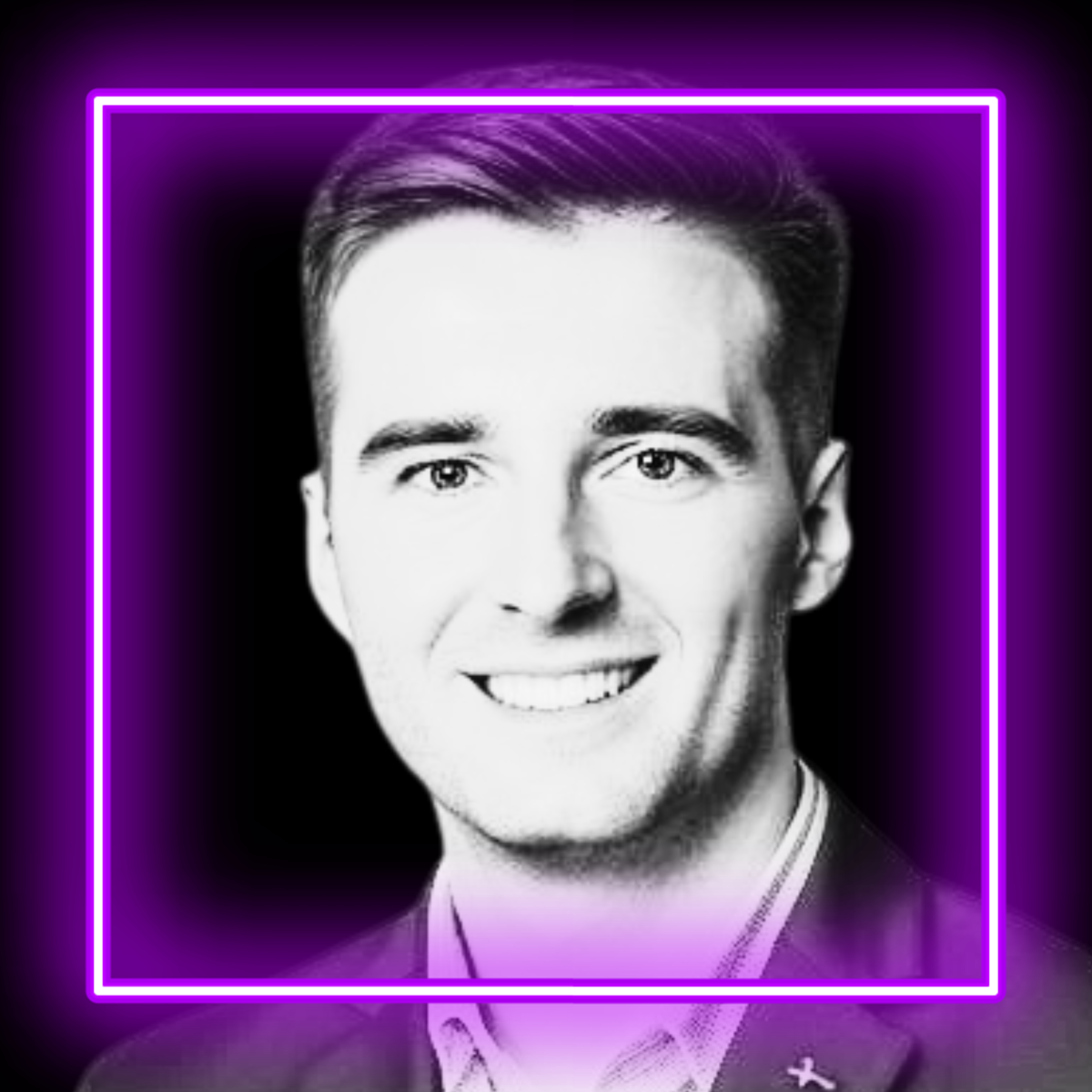
Boris Sevarika, PhD, Founder & CEO of NanoZymeX
Biography
Boris Sevarika is a pharmacist and nanomedicine scientist driven by the question of how biological therapies can be delivered more effectively to patients. Originally from Belgrade, Serbia, he completed his secondary education at the Third Belgrade Grammar School before moving to Germany in 2016 to study pharmacy at Heidelberg University, where he obtained his license to practice as a pharmacist in 2021. Boris later completed a Master’s degree in pharmacy at Saarland University, conducting his Master’s thesis at the Massachusetts Institute of Technology (MIT) in the Ribbeck Lab, where he worked on nanoparticle-based strategies for mucosal drug delivery and transport across biological barriers.
In parallel with his academic work, Boris became increasingly engaged in translating these insights beyond the laboratory. He initially joined the Ancile team, a project focused on nano-based antibacterial surface coatings originating from the University of Geneva. When that project was discontinued, he redirected his efforts toward therapeutic enzyme delivery, building on his PhD research to address unmet needs in lysosomal storage diseases. This transition marked the beginning of NanoZymeX, which he founded to develop next-generation enzyme replacement therapies that integrate nanomedicine engineering with biological and translational considerations from the outset.
He subsequently moved to Switzerland for his PhD at the University of Basel, joining the Nanopharmaceutical and Regulatory Science Group under Prof. Scott McNeil. During his doctoral research, Boris began working extensively on enzyme formulation and lipid nanoparticle–based delivery technologies for lysosomal storage diseases, focusing on how enzyme–lipid interactions, particle design, and biological barriers influence cellular uptake, lysosomal targeting, and immune recognition of therapeutic enzymes.
In parallel with his academic work, Boris became increasingly engaged in translating these insights beyond the laboratory. He initially joined the Ancile team, a project focused on nano-based antibacterial surface coatings originating from the University of Geneva. When that project was discontinued, he redirected his efforts toward therapeutic enzyme delivery, building on his PhD research to address unmet needs in lysosomal storage diseases. This transition marked the beginning of NanoZymeX, which he founded to develop next-generation enzyme replacement therapies that integrate nanomedicine engineering with biological and translational considerations from the outset.
Today, Boris leads the scientific and strategic development of the platform, aiming to improve efficacy, reduce immunogenicity, and establish more realistic, delivery-centered approaches to rare disease therapeutics.
Interview
NanoSphere: Tell us a bit about yourself—your background, journey, and what led you to where you are today.
Boris: I have always been drawn to the intersection of chemistry and biology. Even in high school, I was fascinated by how chemical principles translate into biological function, which led me to participate in the biomedicine program at Petnica, a research organization for motivated high school students. That early exposure shaped my curiosity for translational science and ultimately motivated my decision to pursue pharmacy, a discipline that naturally sits at the interface between molecules and patients.
I moved to Germany to study pharmacy, and a defining moment came during my second year, when I attended a lecture by Prof. Dr. Gert Fricker on the blood–brain barrier and particle-based drug transport. That lecture was a turning point for me. It made clear that drug delivery, not just drug discovery, was where many of the most important unsolved problems in medicine reside. One year later, during my Erasmus exchange in Denmark, I joined the group of Prof. Carsten Uhd Nielsen and worked on drug transport across epithelial barriers. This experience further deepened my interest in biological barriers and convinced me that this was the field I wanted to pursue.
Another formative moment was my summer internship in 2019 at HIPS, in the lab of Prof. Claus-Michael Lehr. I had just returned from my Erasmus stay and deliberately sought out a leading drug delivery lab, even going as far as scanning Google Scholar for groups with the strongest scientific track record. That summer turned out to be pivotal. Beyond the science, I learned what rigorous yet supportive mentorship looks like, and it gave me confidence that I was on the right path. After that, everything began to align. During my fourth year, I worked closely with then-postdoc and now Professor Philipp Uhl in Heidelberg on gastrointestinal barrier transport, further consolidating my expertise in formulation and biological interfaces.
After completing my studies, I spent six months at Roche in formulation development, gaining valuable industry perspective on how delivery technologies are translated under real-world constraints. A year later, I joined the Ribbeck Lab at MIT, where I worked with colleagues from MIT and Princeton on nanoparticle-based mucosal drug delivery. That project resulted in both a publication and a patent application and reinforced my interest in biologically inspired transport mechanisms.
When I returned to Europe, I made a deliberate decision to shift my focus from mucosal to systemic delivery. I joined the University of Basel to pursue my PhD in the Nanopharmaceutical and Regulatory Science Group, where, under the mentorship of Prof. Scott McNeil, I began working on enzyme delivery technologies for lysosomal storage diseases. What started as a scientific challenge soon became a translational one: if we understand disease biology and formulation engineering so well, why are patients still seeing such limited benefit? That question ultimately pushed me beyond purely academic work and toward building NanoZymeX as a platform to translate mechanistic insight into therapies that can meaningfully improve patient outcomes.
NanoSphere: You come to lysosomal storage diseases as both a pharmacist and a nanomedicine scientist. Looking back, what first convinced you that classical enzyme replacement therapy was structurally limited—not just incrementally improvable—and how did that realization shape the original scientific question that ultimately led to the founding of NanoZymeX?
Boris: The turning point for me was realizing that many of the limitations of classical enzyme replacement therapy are not formulation “bugs,” but structural features of the approach itself. Enzymes are infused systemically, circulate only briefly, trigger immune responses, and rely on receptor-mediated uptake pathways that are unevenly expressed across tissues. From a pharmaceutical perspective, this is a fragile delivery strategy.
For years, improvements in the field have largely focused on optimizing the enzyme itself, particularly through glycoengineering approaches such as increasing mannose-6-phosphate (M6P) content to enhance cellular uptake. While these strategies are scientifically sound and have improved receptor affinity, they have not translated into proportional clinical benefit for patients. The reason is fundamentally biological: cells express only a limited number of M6P receptors, and even at optimal binding, the system becomes saturated. In other words, uptake is constrained not by enzyme quality but by the capacity of the cellular transport machinery.
This realization reframed the core question. Instead of asking how to further improve the enzyme, we began asking how to redesign the way enzymes are presented to the body. Nanoparticles change this paradigm by acting as transport systems rather than individual ligands: a single particle can deliver dozens to hundreds of enzyme molecules in one uptake event, effectively bypassing receptor saturation. At the same time, the particle architecture shields the enzyme from premature degradation and immune recognition. NanoZymeX emerged from this shift, placing delivery architecture at the center of therapeutic design rather than treating it as an afterthought.
NanoSphere: NanoZymeX emerged at the intersection of lipid nanoparticle engineering, enzyme biology, and immune interaction. Can you walk us through how the company’s core technology evolved from early academic insight into a coherent therapeutic strategy, and which design trade-offs—efficacy, immunogenicity, manufacturability—you had to confront earlier than you initially expected? Looking forward, beyond specific clinical milestones, what would meaningful success look like for NanoZymeX in the context of patients with lysosomal storage diseases—and what responsibility do you believe companies like yours carry in shaping more realistic, system-level expectations around innovation in rare disease therapeutics?
Boris: NanoZymeX grew out of a simple but powerful academic insight: enzymes interact with lipid assemblies in ways that can be deliberately engineered, not just tolerated. Instead of relying on random encapsulation, we learned how to use charge-mediated and structural interactions to actively recruit enzymes into lipid nanoparticles. This dramatically increases encapsulation efficiency and enables high enzyme payloads per particle while preserving enzymatic activity and stability. Just as importantly, we developed formulation strategies that allow removal of externally associated enzymes from the particle surface, which is critical for controlling biodistribution, reproducibility, and immune exposure. Together, these elements transformed an academic concept into a coherent, translation-oriented therapeutic strategy.
As the technology matured, we quickly learned that optimization is never one-dimensional. Increasing cellular uptake can increase immune visibility. Reducing immunogenicity can influence intracellular trafficking. And particle designs that perform beautifully in vitro may not be compatible with scalable, robust manufacturing. These trade-offs emerged much earlier than expected, already at the proof-of-concept stage, and forced us to be disciplined about particle architecture, model selection, and how we link formulation performance to meaningful in vivo outcomes. The challenge was not simply to make better particles, but to make the right particles for clinical translation.
At the same time, one of the most important shifts for us was realizing that scientific optimization alone is not enough. We learned to stop thinking purely as scientists and start thinking from the patient’s perspective. To understand what patients truly need, we actively engaged with patient advocates and organizations such as the International Pompe Association and spoke extensively with clinicians who care for these patients every day. Conversations with experienced metabolic specialists and pediatricians, including experts like Prof. Giancarlo Parenti, were particularly formative in helping us understand real-world limitations of current therapies and what “better” actually means in clinical practice.
For NanoZymeX, meaningful success goes beyond reaching individual clinical milestones. It means demonstrating that a delivery-centric approach can lead to more consistent tissue exposure, improved tolerability, and more predictable outcomes for patients with lysosomal storage diseases. With that comes responsibility. Companies like ours must communicate progress honestly, acknowledge limitations, and help shape realistic, system-level expectations around innovation in rare disease therapeutics. In that spirit, we are currently looking for partners who want to help build something durable and clinically meaningful, not just reach the next headline milestone. For patients and families, credibility and steady, transparent progress matter as much as any single breakthrough.
NanoSphere: If there’s one key message or insight you’d like to share with readers about the future of nanomedicine, what would it be?
Boris: “Nanomedicine will not succeed by being more complex, but by being more intentional—designed around biology, manufacturability, and patient reality from day one.”