Aliasger K. Salem | PhD, Senior Associate Vice President for Research, Lyle and Sharon Bighley Endowed Chair and Professor of Pharmaceutical Sciences, University of Iowa
Aliasger K. Salem | PhD, Senior Associate Vice President for Research, Lyle and Sharon Bighley Endowed Chair and Professor of Pharmaceutical Sciences, University of Iowa
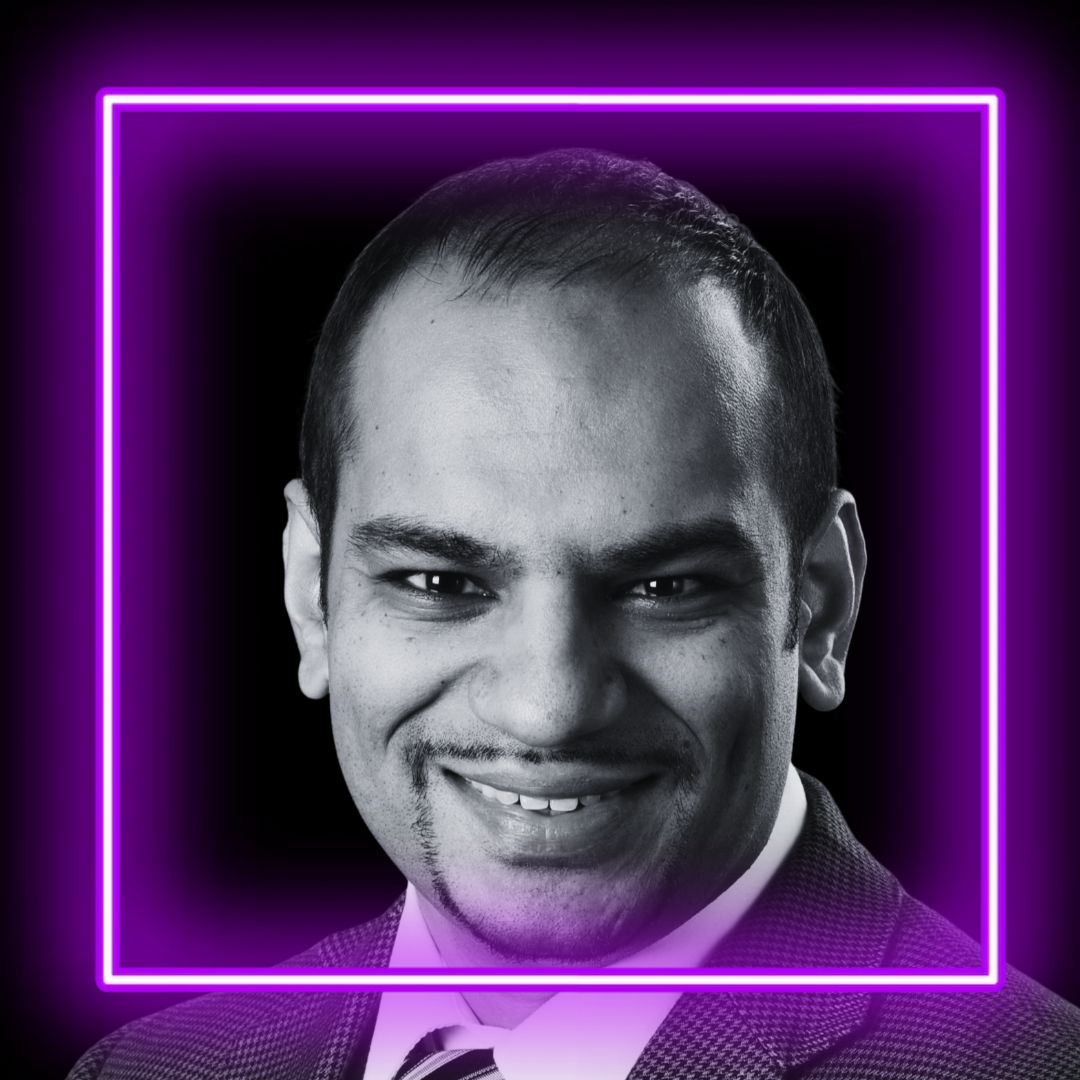
Aliasger K. salem | phd, senior associate vice president for research, lyle and sharon bighley endowed chair and professor of pharmaceutical sciences, university of iowa
Biography
Aliasger K. Salem, PhD, is Senior Associate Vice President for Research at the University of Iowa and the Lyle and Sharon Bighley Endowed Chair and Professor of Pharmaceutical Sciences and Experimental Therapeutics in the University of Iowa College of Pharmacy.
Dr. Salem’s research focuses on drug and gene delivery, nanomedicine, vaccines and immunotherapy, regenerative medicine, ocular therapeutics, and nanotoxicology. His laboratory develops particle-based delivery systems and biomaterials designed to improve the localization, safety, and effectiveness of therapeutic agents. These technologies have been applied to cancer immunotherapy, infectious disease vaccines, tissue regeneration, and diseases of the eye.
He earned his bachelor’s degree in applied chemistry from Aston University and his PhD in pharmacy from the University of Nottingham in the United Kingdom. He subsequently completed postdoctoral training at the Johns Hopkins University School of Medicine before joining the University of Iowa in 2004.
Dr. Salem has authored more than 290 peer-reviewed publications and is an inventor on multiple patents. He is an elected Fellow of the National Academy of Inventors, the American Association for the Advancement of Science, the American Institute for Medical and Biological Engineering, the American Association of Pharmaceutical Scientists, and the Controlled Release Society. He has also helped establish startup companies focused on translating academic discoveries into new therapeutic products.
In his university leadership role, Dr. Salem works to strengthen interdisciplinary research, shared research infrastructure, innovation, entrepreneurship, and the translation of discoveries into benefits for patients and society.
Interview
NanoSphere: Tell us a bit about yourself—your background, journey, and what led you to where you are today.
Aliasger: I trained first as an applied chemist, but I became increasingly interested in what happens after a potentially therapeutic molecule is discovered. A molecule may have remarkable activity in a laboratory assay, but it will not become a medicine if it cannot remain stable, reach the correct site in the body, be released at an appropriate rate, and be manufactured reproducibly and safely. That challenge drew me toward pharmaceutics and drug delivery.
My PhD training at the University of Nottingham gave me a strong foundation in pharmaceutical sciences, and my postdoctoral work at the Johns Hopkins University School of Medicine exposed me to the value of bringing together engineering, biology, immunology, and medicine. When I joined the University of Iowa in 2004, I found an exceptionally collaborative environment where those disciplines could intersect.
Over time, my research expanded from drug and gene delivery into cancer vaccines, regenerative medicine, ocular therapeutics, and nanotoxicology. These were not disconnected changes in direction. Each arose from a patient-focused problem and from collaboration with people who brought different expertise and perspectives. I have always been most energized by work at the boundaries between disciplines.
My transition into research leadership developed from the same philosophy. Running a laboratory taught me that individual discoveries depend on a much larger ecosystem that includes talented trainees, excellent shared facilities, strong collaborations, research administration, commercialization support, and a culture that allows people to take thoughtful risks. My administrative role gives me an opportunity to strengthen that ecosystem for researchers across the university. I still think of myself as a scientist and mentor. Research leadership is an extension of that work and an opportunity to help other people’s ideas succeed.
NanoSphere: Your career has spanned drug discovery, formulation and delivery, nanotoxicology, regenerative medicine, and now research leadership. What have these different perspectives taught you about what it actually takes to move an idea from the laboratory toward a therapy that can reach patients?
Aliasger: The most important lesson is that translation is a team endeavor. A scientifically elegant idea is only the beginning. A successful therapy requires a compelling biological rationale, an appropriate delivery route, a reproducible formulation, scalable manufacturing, meaningful analytical and potency assays, relevant preclinical models, an acceptable safety profile, a regulatory strategy, and a realistic understanding of the patient and clinical need. The weakest of those components can determine the outcome of the entire program.
Each area of my career has reinforced a different part of this lesson. Formulation science taught me that excipients, processing conditions, stability, and manufacturing are not secondary details. They are part of the therapy. Nanotoxicology taught me that efficacy and safety cannot be optimized independently. Regenerative medicine taught me that the biological environment changes over time and that a successful intervention must work with that environment. Research leadership has shown me how strongly translation also depends on infrastructure, institutional culture, funding, partnerships, and the ability to assemble the right team.
I believe translational projects should begin with a clear description of the intended product. Who is the patient? At what stage of disease would the therapy be used? How would it be administered? What level of benefit would be clinically meaningful? What risks would be acceptable? Could the product be manufactured consistently and at an achievable cost? These questions should guide scientific development from the beginning, rather than being considered only after promising efficacy data have been generated.
It is also essential to involve clinicians, toxicologists, manufacturing experts, regulatory specialists, and, when possible, patients early in the process. Reproducibility is not simply a matter of good laboratory practice. It is a central translational outcome. The goal is not only to show that something can work once under ideal conditions, but to demonstrate that it can work consistently in a form that can ultimately be used in patients.
Finally, translation is rarely linear. Programs encounter negative results, manufacturing problems, unexpected toxicities, and changes in the underlying biology. The ability to respond honestly to those results, revise assumptions, and sometimes stop or redirect a project is as important as scientific creativity.
NanoSphere: Much of your work has focused on drug and gene delivery systems. Where do you see the biggest disconnect today between promising therapeutic science and the practical systems required to deliver that science safely, reproducibly, and effectively in patients?
Aliasger: One of the largest disconnects is that academic research and therapeutic development often optimize for different outcomes. Academic research appropriately values novelty and mechanistic insight. A therapeutic product, however, must perform reproducibly across different batches, manufacturing sites, clinical settings, and biologically diverse patients. A statistically significant result in a highly controlled model is important, but it is not sufficient. Delivery systems are also still too often treated as containers that can be selected after the therapeutic cargo has been identified. In reality, the cargo, carrier, route of administration, target tissue, disease biology, immune response, and manufacturing process form a single therapeutic system. Changing any one of these elements can alter efficacy, biodistribution, toxicity, stability, and clinical feasibility.
Another problem is comparability. Formulations may be described incompletely, evaluated with different dose metrics, or tested using models and endpoints that make meaningful head-to-head comparisons difficult. Some systems rely on specialized materials or laboratory processes that cannot be transferred or scaled easily. A lack of standardized reporting, validated potency assays, and shared reference materials makes it harder to determine whether one platform truly offers an advantage over another.
We need to design delivery systems with the eventual clinical and manufacturing requirements in view. This means defining critical quality attributes early, developing mechanism-relevant potency assays, understanding biodistribution and immune responses, evaluating stability, controlling raw materials, and considering scale-up before the formulation becomes locked in. It also means reporting methods with enough detail that other laboratories can reproduce the work.
The broader conceptual shift is to recognize that delivery is not a downstream technical problem. It is part of therapeutic design from the beginning. Earlier engagement among discovery scientists, formulation experts, clinicians, manufacturers, regulators, and patients would help close the gap between an exciting laboratory result and a therapy that can be used reliably in the real world.
NanoSphere: Congratulations on the NIH SBIR award. This is an exciting step toward translating a new therapeutic approach for Fuchs Endothelial Corneal Dystrophy. What is the key milestone you believe needs to be achieved next to move this work from a promising laboratory approach toward meaningful clinical impact?
Aliasger: The most important next milestone is to demonstrate reproducible and durable protection of corneal endothelial cells in clinically relevant models, using a dose, formulation, and treatment schedule that are both safe and practical.
Fuchs Endothelial Corneal Dystrophy is a slowly progressive and biologically heterogeneous disease. It is therefore important to show not only that a therapeutic candidate produces a favorable signal in a laboratory model, but also that the effect is linked to the proposed mechanism, is observed in relevant human-derived systems, and translates into preservation of corneal function. Mechanism-linked biomarkers could also help identify the patients most likely to benefit and provide useful endpoints as the program moves forward.
A strong preclinical package will need to integrate efficacy with ocular exposure, safety and tolerability, formulation stability, and a manufacturing process that can be reproduced and scaled. These elements will support regulatory discussions and help define an appropriate patient population, dosing strategy, and clinical endpoint.
The long-term objective is not simply to treat advanced disease. We hope to develop an intervention that can prevent or slow the loss of corneal endothelial cells, preserve vision, and delay or potentially reduce the need for corneal transplantation. The NIH Phase I SBIR award gives our S5G Therapeutics team an important opportunity to move from scientific discovery into disciplined product development and establish the evidence needed for the next stage of translation.
Aliasger's references
- Salem Research Laboratory: https://salem.lab.uiowa.edu/
- Google Scholar: https://scholar.google.com/citations?user=yI9ON-UAAAAJ&hl=en
- Publication on ferroptosis in Fuchs Endothelial Corneal Dystrophy: https://pubmed.ncbi.nlm.nih.gov/34087583/
- NIH SBIR announcement:https://www.linkedin.com/posts/aliasger-salem-5b36aa13_sbir-nih-innovation-activity-7491240475056812036-JWpR